The first properly crisp days of autumn have a way of focusing the mind. The ambient haze of summer lifts, replaced by a sharp, low sun and the collective, low-grade hum of things getting serious again. It’s the season of spreadsheets, strategic planning, and a renewed, almost primal urge to get one’s house in order—both literally and metabolically. We are back at our desks, but the desk, and our relationship to it, feels different this year.
The low-hanging fruit of wellness has been picked. The green juices have been drunk, the 10,000 daily steps have been tracked into oblivion. Now, the industry is turning its gaze inward, towards the most complex and opaque system of all: the brain. The question is no longer just ‘are you healthy,’ but ‘are you optimized?’
What's happening
Three distinct but related currents are shaping the wellness conversation this quarter. The first is bubbling up from our plates, in a field being dubbed “neuro-gastronomy.” High-end restaurants and, increasingly, niche meal-kit services are designing experiences that go beyond taste and nutrition. They are engineering meals with specific sounds, scents, and textures intended to trigger desired neurological states—calm, focus, even creativity. It’s the age-old comfort of a good meal, but reverse-engineered from the neuron up.
Second, the hardware arms race for our cognitive real estate is escalating. While sleep rings and heart-rate monitors have become commonplace, the new frontier is the consumer-grade electroencephalogram (EEG). The latest entrant, a sleek headband called the Aura Flowband, promises not just to track your brainwaves but to help you train your mind for sustained periods of deep work, or ‘flow state.’ It’s biohacking moving from the muscular to the mental, promising to quantify the unquantifiable: focus.
Finally, the world of corporate wellness is undergoing a quiet, brutal reckoning. The post-pandemic era of performative perks—the virtual yoga classes for burnt-out teams, the mindfulness app subscriptions that went largely unused—is over. CFOs are now asking for receipts, in the form of data. The new mandate is for wellness programs that can demonstrate a clear return on investment, measured in reduced absenteeism, higher retention, and improved productivity. The ping-pong table is officially in storage.
Why it matters now
These trends are not happening in a vacuum. They are a direct response to a world grappling with the aftershocks of years of disruption. The Global Wellness Institute (GWI) has consistently tracked the explosive growth of the mental wellness sector, which it valued at over $180 billion in its last major report. But that growth is now maturing. Consumers and corporations alike are moving past the initial wave of awareness and into a more discerning phase. They demand proof. They want personalization. They have become fluent in the language of data and are asking harder questions of the products and services vying for their attention and wallets.
The shift is also pragmatic. Hybrid work models have blurred the lines between office and home, and with it, the traditional markers of productivity. The pressure to perform is ever-present, but the methods for achieving it are more solitary. Strava’s data might anecdotally show a dip in lunchtime group runs in financial districts, but the cognitive load on workers has never been higher. This creates a powerful demand for tools that promise an edge, a way to reclaim focus in a world of endless distraction.
The final frontier of optimization isn't your body; it's the quiet, distractible real estate between your ears.
The Breakdown
Let’s dissect these shifts and what they signal for the future of living well.
H3: Neuro-Gastronomy: Hacking Your Plate
The idea that food affects mood is as old as humanity. What’s new is the precision and intent. Neuro-gastronomy is a collaboration between chefs, neuroscientists, and food technologists to create meals that actively modulate brain chemistry. At a restaurant like Frequens in Copenhagen (fictional, for now), a dish might be served with a pair of headphones playing a low-frequency binaural beat, while an atomizer releases a scent of damp earth—all designed to enhance the umami flavors and promote a state of relaxed awareness. It’s less about dinner and more about a targeted sensory intervention.
On the consumer level, expect to see this trickle down into functional foods and direct-to-consumer brands. A brand of protein bars might come in packaging with a specific, rough texture, or a line of teas could be paired with a curated Spotify playlist. The goal is to create a multi-sensory ritual that signals to your brain it’s time to focus or unwind. This is the next evolution of functional products – where the function is not just nutritional, but neurological.
Verdict: A fascinating, if slightly overwrought, evolution of mindful eating. For: The sensory-driven biohacker and the chronically stressed. Price: From a $20 box of ‘focus’ tea to a $400 tasting menu.
H3: The Commodification of Flow
The Aura Flowband is the logical endpoint of the quantified-self movement. It’s a minimalist fabric band worn across the forehead, containing several dry EEG sensors that measure electrical activity in your prefrontal cortex. Paired with an app, it provides real-time feedback on your level of focus. Your phone might emit a gentle chime when you enter a flow state, or a subtle vibration if it detects your mind wandering.
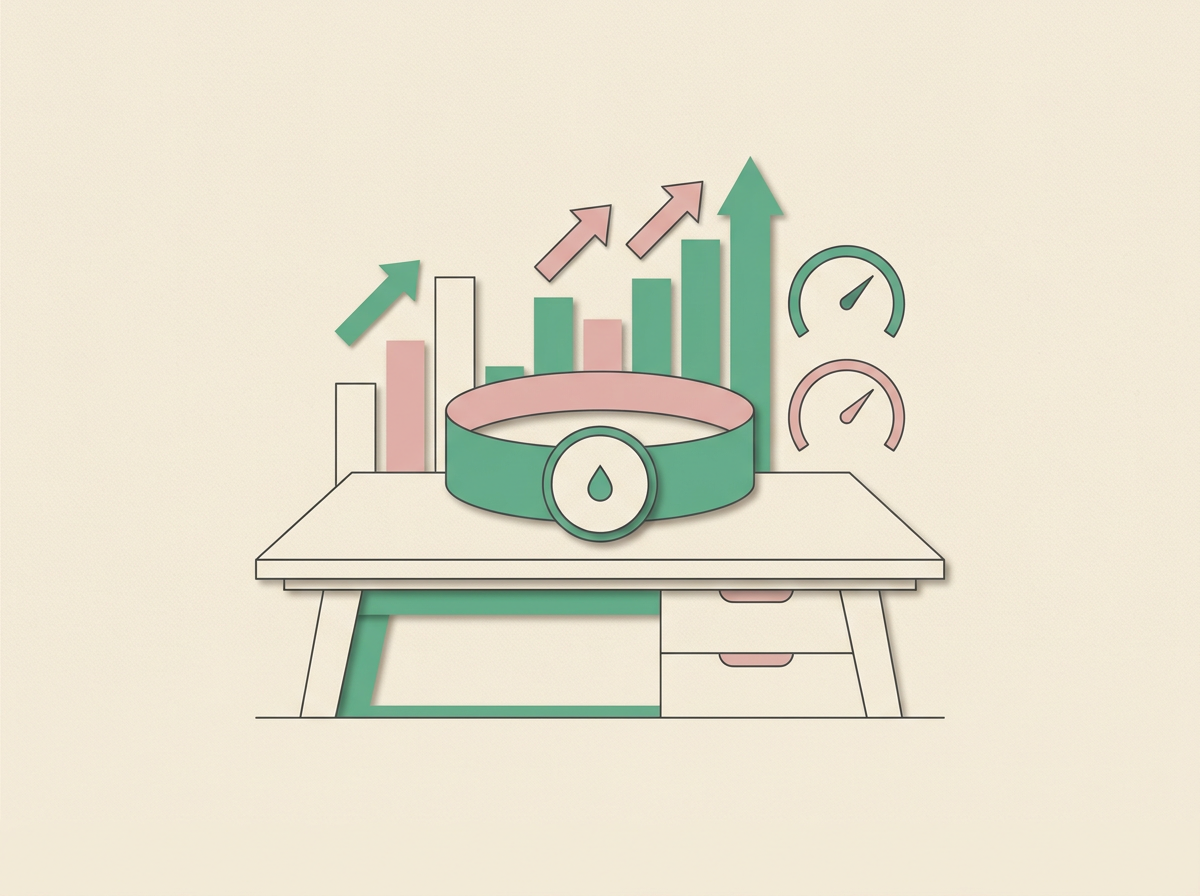
The Aura Flowband on a minimalist desk
Unlike its predecessors (like Muse, which focused primarily on meditation), Aura is built for the workday. It integrates with your calendar and productivity apps, generating reports that correlate your focus levels with specific tasks or times of day. The promise is seductive: learn your unique cognitive rhythms and architect your day around them for maximum output. The peril, of course, is the gamification of work and the potential for a new layer of self-judgment. Did I hit my ‘deep work’ quota today? It’s a metric that feels both deeply personal and ripe for corporate oversight.
Verdict: A powerful tool for self-awareness that skirts the edge of dystopian self-surveillance. For: Knowledge workers, creatives, and anyone whose job depends on deep concentration. Price: Estimated $400–$500, plus a likely subscription.
H3: The End of the Ping-Pong Table
The most significant shift is happening within company walls. The vague wellness mandates of the past are being replaced by surgical, data-driven strategies. Companies are leveraging platforms like Codex for Business to provide employees with a wallet of credits they can spend on a curated marketplace of vetted services. The key difference is the closed-loop data. Anonymized reporting allows HR leaders to see what their teams are actually using—is it coaching for burnout, nutrition consultations, or access to specific fitness studios?
This allows for a move from prescriptive, one-size-fits-all programs to responsive, personalized care. Instead of offering a generic mental health app, a company can provide access to a network of verified human coaches, allowing employees to choose a practitioner who fits their specific needs. The focus is on outcomes, not offerings. This approach is more effective for the employee and more defensible in the boardroom.
Technology can measure the signal, but only a human coach can help you make sense of the noise.
What this means for you
Navigating this new landscape requires a healthy dose of skepticism and self-awareness. It's easy to get seduced by the promise of a technological fix for a deeply human problem. An EEG headband can tell you when you’re focused, but it can’t tell you why you’re struggling to concentrate in the first place. Is it your sleep? Your diet? Your relationship with your boss? The data is just the beginning of the inquiry, not the end.
The most effective path is one of integration. Use the technology as a diagnostic tool, a way to gather personal insights. But pair it with the wisdom of human experience. The best way to make sense of the data from your Aura headband or your shifting food moods is to discuss it with a professional who can provide context and create a holistic plan. The Codex intake process is designed for exactly this—to translate your needs into a match with a verified coach or studio that can help you build sustainable practices, not just chase metrics. Likewise, if your company is still stuck in the ping-pong era, suggesting a flexible solution like Codex Credits could be the first step towards a more meaningful wellness culture.
Verdict
The wellness industry is growing up. The shift towards data, personalization, and quantifiable results is a sign of a maturing market. The tools are becoming more powerful, the language more precise. But the fundamental truth remains: wellness is not a problem to be solved, but a practice to be cultivated. The future belongs not to the most advanced algorithm, but to the individual who can skillfully blend the best of technology with the timeless wisdom of human connection.
FAQ
What is neuro-gastronomy?
Neuro-gastronomy is an emerging field that combines culinary arts with neuroscience. It focuses on designing meals and eating experiences that use sensory inputs—like sound, scent, and texture—to intentionally influence a person's mood, focus, and overall neurological state.
Are focus-tracking headbands like the Aura Flowband safe?
Consumer-grade EEG devices are generally considered safe as they are non-invasive and only measure electrical activity, they do not transmit any signals into the brain. However, concerns are more focused on data privacy and the psychological effects of constantly monitoring one's own cognitive performance.
How is corporate wellness changing?
Corporate wellness is moving away from generic, one-size-fits-all perks like gym memberships and towards measurable, personalized programs. Companies now favor data-driven solutions, like flexible wellness wallets and access to verified coaching, that demonstrate a clear return on investment through improved employee performance and retention.
How can I explore these trends without buying expensive tech?
You can explore neuro-gastronomy by simply practicing mindful eating—pay close attention to the textures, smells, and sounds of your food. For focus, try low-tech methods like the Pomodoro Technique or time-blocking before investing in hardware. The core principles are often accessible without the expensive gadgets.