The wellness industry doesn’t have an innovation problem; it has a curation problem. Every week, our desks are quietly inundated with the new, the novel, and the supposedly revolutionary. There are AI-powered nutrition apps that promise to decode your gut biome from a single questionnaire, mushroom coffees that taste suspiciously like, well, mushrooms, and a constant stream of wearables that vow to quantify every conceivable aspect of human existence.
Our job at Codex isn't to amplify this noise. It's to find the signal. This means subjecting a carefully selected shortlist of products, practitioners, and spaces to a process of rigorous, human-led evaluation. It’s a quiet, methodical, and often lengthy procedure. This is a look at what’s currently on our vetting desk.
What's happening
Curation, in the context of wellness, has become an act of defiance. It is a stand against the firehose of venture-backed mediocrity and influencer-driven hype. The market is awash with options, but starved of trust. Anyone can launch a supplement brand from their laptop; anyone with a compelling backstory can brand themselves a guru. The barrier to entry is low, and the cost of a wrong choice—whether it's wasted money on a useless gadget or wasted time with an unqualified coach—is high.
This is why our process is tiered. Everything starts as 'crawled,' a simple aggregation of what’s out there. From there, a studio or coach can 'claim' their profile, confirming their data. But the final and most important step is 'verified.' This is where our team steps in. It involves credential checks, interviews, mystery shopping, sample sessions, and deep dives into methodology. We talk to former clients. We try the product for months, not minutes. We want to know if it integrates, if it endures, if it actually works when the marketing gloss has worn off.
It’s the difference between a directory and a recommendation. A directory gives you a thousand choices. A recommendation gives you one: the right one. Our entire model is built on the belief that for any given wellness goal, there is a single best next step for you. Our job is to find it. This requires us to be constantly testing, not just the new and shiny, but the established players who may be coasting on reputation.
Why it matters now
The Global Wellness Institute (GWI) valued the global wellness economy at $5.6 trillion in its latest report, a figure so vast it's almost meaningless. What's more telling is the fragmentation. This isn't one industry; it's thousands of micro-industries, from boutique fitness to mental health tech, all competing for the same finite resource: your attention and trust. And that trust is in short supply. Consumers are more skeptical than ever, worn down by a cycle of broken promises.
This environment creates a demand for reliable filters. In a world of infinite, algorithmically-sorted choice, the most valuable service is discerning, human-powered judgment. It matters now because the stakes are higher. We are not just talking about ineffective protein powders anymore. We are talking about unregulated mental health apps, uncertified coaches advising on complex personal issues, and biometric devices making quasi-medical claims without sufficient validation. Our role is to provide a layer of assurance, a simple signal that a product or person has been scrutinized by a knowledgeable, impartial third party.
Curation isn't about finding the best of everything; it's about finding the right thing for someone.
The Vetting Desk
Here’s a snapshot of three items currently moving through our verification pipeline. They represent a cross-section of the wellness landscape: a piece of hardware, a physical space, and a human practitioner.
The Product: Aura Strap 2 for Apple Watch
This is a clever piece of engineering that addresses a notable gap in the Apple ecosystem. The Aura Strap 2 replaces your standard Apple Watch strap and adds bioelectrical impedance analysis (BIA) capabilities. By holding your hand on the strap’s sensor for a few seconds, it sends a tiny, imperceptible current through your body to measure body composition (fat, muscle mass) and hydration levels. The data syncs with a dedicated app and Apple Health.
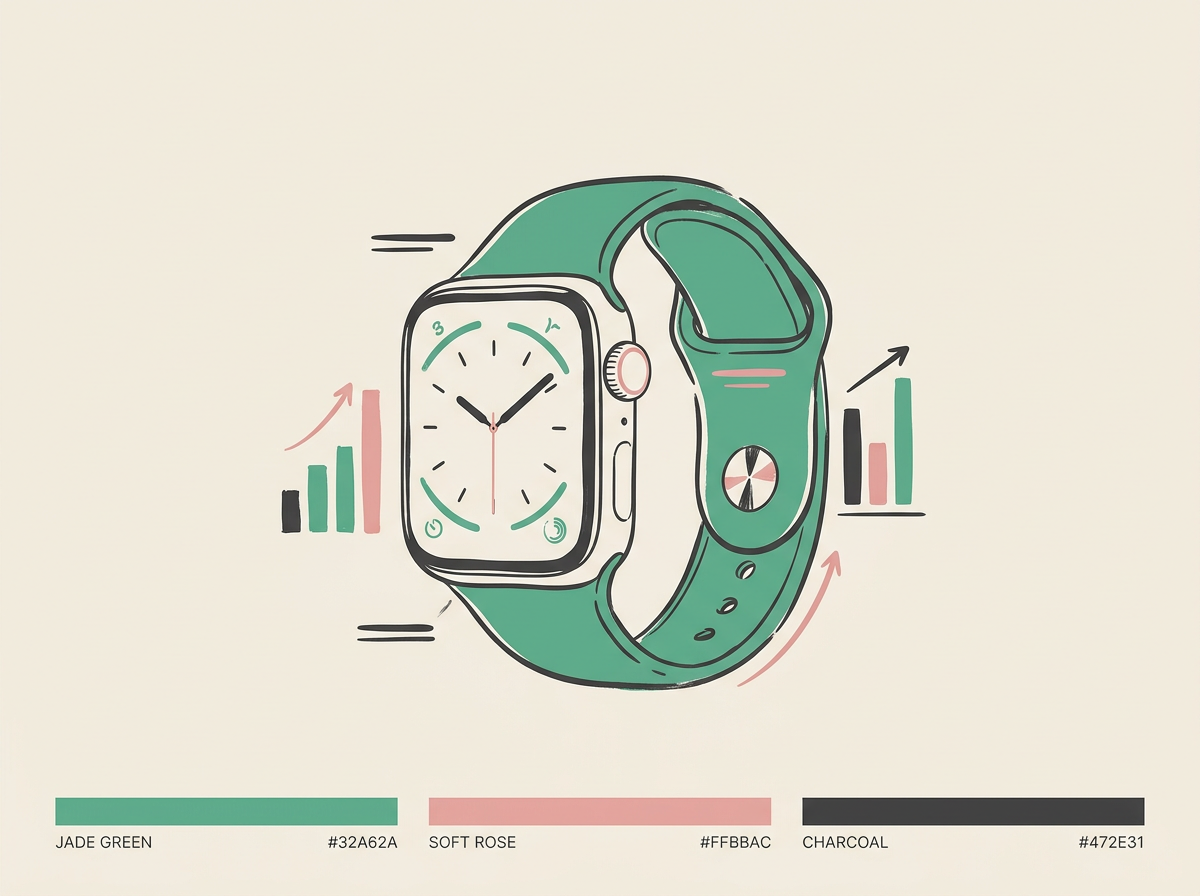
Aura Strap 2 attached to an Apple Watch
After three months of testing, our initial takeaway is that its value is directly proportional to your consistency. The measurements, while not medical-grade, are surprisingly consistent when taken under the same conditions each day (e.g., first thing in the morning). The real utility isn’t in a single reading, but in the trendline over weeks and months. It visualizes the impact of a new training block or dietary change in a way that the scale alone cannot. The hardware is well-made, but the user experience lives in the app, which could use a bit more interpretive guidance for the average user.
Verdict: A powerful, if niche, upgrade for data-obsessed athletes who want to go deeper than Apple’s native metrics. Who it's for: Quantified-self adherents, biohackers, and anyone serious about tracking body composition changes. Price band: €150–€200
The Studio: Remedi, London
Contrast therapy—the practice of alternating between hot and cold exposure—is having a moment. Remedi, a new studio in London's Shoreditch, is our test case for how to execute this concept well. Many new studios simply place a sauna next to a cold plunge and call it a day. Remedi’s approach is more thoughtful. The experience is structured as a 60-minute, small-group session led not by a trainer, but by an audio guide and ambient lighting cues.
Their programming cycles you through rounds of a spacious infrared sauna and a 4°C cold plunge, with timed intervals for breathwork and recovery in a quiet, low-lit transition zone. The vibe is intentionally monastic and tech-free (phones are stored in lockers). This isn't a social club; it’s a space for internal work. Our initial visits suggest the benefits—reduced inflammation, improved sleep, and a notable sense of post-session calm—are real. The key differentiator is the guided nature of the experience, which prevents the user from simply 'enduring' the cold and instead reframes it as a meditative practice. We are currently evaluating their instructor training and safety protocols before considering a full verification.
Verdict: A compelling, well-executed concept for those seeking the benefits of contrast therapy without the 'bro' culture. Who it suits: Stressed urbanites, athletes seeking active recovery, and the meditation-curious. How to book: Direct booking, with potential Codex integration pending verification.
The Coach: Dr. Anya Sharma, Performance Psychology
Anya Sharma represents the caliber of practitioner we seek for the Codex coaching platform. She holds a PhD in Sport and Exercise Psychology and specializes in a very specific niche: mental performance for amateur endurance athletes. These are not professionals, but committed individuals training for marathons, triathlons, or Ironman events who find themselves hitting a psychological, rather than physical, wall. Her profile was initially flagged by our system ('crawled'), she then 'claimed' it, and for the past month, she has been in our 'verified' pipeline.
Her methodology is a blend of traditional cognitive behavioral therapy (CBT) and mindfulness-based stress reduction (MBSR), tailored to the anxieties of competition and training plateaus. We've completed a review of her credentials, conducted our own sample session (which focused on building a pre-race mental routine), and are now in the final stage: confidential conversations with several of her former clients. The feedback so far highlights her ability to provide actionable, non-clinical tools that directly translate to improved performance and, more importantly, enjoyment of the sport. She is a prime example of why human verification is irreplaceable; no algorithm can assess empathy or the nuance of a coaching relationship.
Verdict: A highly-specialized and credentialed expert for a common but underserved problem in amateur sports. Who it's for: Amateur athletes struggling with motivation, race-day anxiety, or performance plateaus. Status: Final stage of verification.
The difference between a good tool and a great one is whether it disappears into the routine of your life.
What this means for you
This process of deep evaluation is, ultimately, for you. It’s a service designed to reduce friction and increase trust, allowing you to invest your time and resources with confidence. You don't need to spend hours scrolling through reviews of questionable origin or testing three different studios to find one that fits. We are doing that work on your behalf, building a curated ecosystem where every option has been vetted for quality, safety, and efficacy.
The goal is to transform the way you find support. Instead of endless browsing, you can take our confidential /intake, which uses a sophisticated series of questions to understand your unique needs and surfaces a single, ideal match. That match might be a coach like Dr. Sharma, a space like Remedi, or a product that fills a specific gap in your routine. For those who prefer to explore, our directories of /studios and /coaches contain only those who have passed our rigorous standards. You can also compare products and services head-to-head in our /vs/reviews section to see how they stack up.
Verdict
Our work is to build a smaller, better-lit corner of the wellness world. The items on our vetting desk this month are just a few examples of that mission in practice. By holding everything to the same high standard—whether it's a piece of hardware, a physical space, or a human expert—we aim to replace the chaos of choice with the clarity of a single, trusted recommendation.
FAQ
What is the Codex vetting process?
It's a tiered system. We start by crawling publicly available data ('crawled'), then allow practitioners to claim their profiles ('claimed'). The final, highest tier ('verified') involves a manual review of credentials, sample sessions, and client feedback by our team.
Why not just list everything and let users decide?
We believe in quality over quantity. The paradox of choice can be paralyzing, especially in wellness. Our job is to do the filtering so you can focus on what works for you, saving you time and money.
How can I find a coach or studio that's right for me?
The best way is to start with our AI-powered /intake. It asks a series of questions about your goals and preferences to provide a single, highly-personalized match from our verified network of coaches, studios, and products.
Do you get paid to feature these products or services?
No. Our editorial is independent. The products, coaches, and studios featured here are part of our ongoing vetting pipeline. If they pass, they may be listed on the Codex marketplace, but this feature is not a paid placement.