The delivery van has become a familiar sight, its quiet electric hum a near-daily soundtrack to our work. Inside its latest payload isn't another case of oat milk for the office kitchen, but a discreetly packaged prototype, a piece of what someone, somewhere, believes is the future of wellness. It sits on the long oak table in the lab, nestled between a set of smart dumbbells that promise impossible gains and a bio-fermented adaptogenic tincture that smells faintly of moss and ambition.
This is the intake process. Before any coach, studio, or product makes it onto the Codex platform, it passes through our hands, and often onto our bodies. It’s a constant, sometimes bewildering, stream of innovation and iteration, and our job is to separate the signal from the noise.
What's happening
Every week, our trends team fields hundreds of pitches. They come from established brands launching new lines, from crowdfunded startups running on sheer conviction, and from independent coaches who believe they’ve unlocked a new modality. The sheer volume is a testament to a global obsession with self-improvement, a market that seems to mint new categories overnight. Sleep coaching, metabolic fitness, nervous system regulation—these were niche concepts a decade ago. Now, they are billion-dollar verticals.
Our initial filter is simple: does it solve a real problem, and is there any verifiable science—or at least a plausible hypothesis—behind it? This culls the herd significantly, removing the crystal-infused water bottles and quantum energy amulets. What remains is still a formidable mountain of potential. This is where the real work begins: desk research, expert consultation, and finally, hands-on testing.
This quarter's cohort is particularly interesting. It’s a microcosm of the industry's broader shifts: a move from superficial metrics to deep cellular insights, a pivot from high-intensity everything to nuanced somatic work, and a fascinating blend of ancient wisdom with cutting-edge AI. We’re not just testing if a product works as advertised; we’re asking if it offers a genuinely new and valuable way for someone to understand and improve their health.
Why it matters now
The wellness economy is not just growing; it's metastasizing. The Global Wellness Institute (GWI) valued the market at over $5.6 trillion in its last major report, with projections continuing their steep upward trajectory. This firehose of capital fuels an equally powerful firehose of products and services, all competing for your attention and wallet. The result is a paradox of choice that can lead to paralysis, or worse, poor decisions based on slick marketing rather than sound principles.
In such a saturated environment, curation becomes a critical utility. The challenge is no longer finding an option, but finding the right one. This is why our vetting process is so rigorous. We act as a proxy for the discerning consumer, absorbing the risk and doing the homework. When a user comes to our /intake process, the recommendations they receive aren't just algorithmically matched; they are drawn from a pool of options that have already survived a gauntlet of human-led scrutiny. It’s about building trust in an industry where it's often in short supply.
In an industry selling optimisation, the most valuable service is simplification. Curation isn't a luxury; it's a necessity.
The picks
Here’s a glimpse at what’s currently on the testing bench. This isn’t an endorsement—not yet, anyway. Some of these may end up as featured listings on Codex, others may be relegated to our internal library of 'interesting failures'. Our full findings live in our internal product review database, which informs the options we ultimately make available on the platform.
The Wearable: Aetheros Spectra
The promise of non-invasive health monitoring has been the industry's white whale for years. The Aetheros Spectra is the closest we've seen to a credible attempt. Using a miniaturized form of Raman spectroscopy—a technique that analyzes molecular vibrations with light—it claims to provide real-time, cuffless blood pressure, plus continuous glucose and lactate monitoring, all from the wrist. It’s a quantum leap beyond the PPG sensors found in today’s smartwatches. The early data from our lab unit is promising, tracking well against our medical-grade control devices, but we're seeing some latency and occasional dropouts. The user experience is still raw, but the core technology is profound.
- Verdict: Potentially revolutionary, but still feels like a developer kit.
- For: Biohackers, endurance athletes, and anyone managing metabolic health who is willing to tolerate a beta experience for cutting-edge data.
- Price: Estimated €799, plus a likely subscription for advanced analytics.
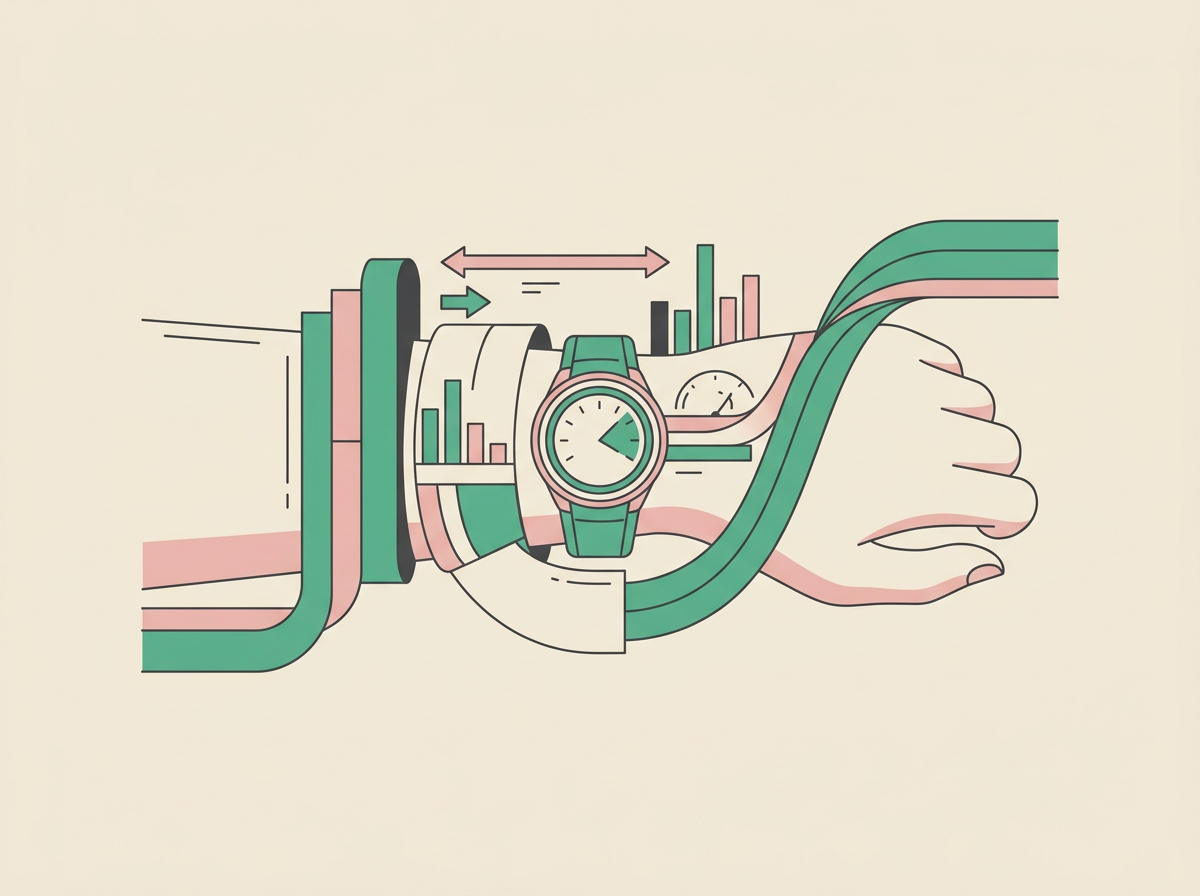
a sleek futuristic wrist wearable on a person's arm
The Studio: Somatic Field
Tucked away in a quiet Berlin side-street, Somatic Field is an antidote to the high-decibel, high-intensity fitness that has dominated the last decade. There are no leaderboards, no pumping basslines. Instead, the studio focuses on "nervous system literacy." A class might blend gentle, floor-based movement derived from Feldenkrais with controlled breathwork and even periods of guided, silent stillness. The goal isn't to burn calories or build muscle in the traditional sense, but to down-regulate a chronically stressed system and retrain autonomic responses. It’s subtle, deep work that feels less like a workout and more like neural physiotherapy. We've sent a few team members, and the universal feedback is a sense of profound calm and groundedness that lasts for days. The question is how to scale such a nuanced, instructor-dependent practice. For now, you can find similar approaches by searching for somatic or Feldenkrais specialists on our /studios page.
- Practice: Small-group classes (max 8 people) and one-on-one sessions.
- Vibe: Monastic, quiet, and deeply focused. Think lab-meets-zen-monastery.
- Results: Reduced anxiety, improved sleep, and a greater sense of bodily awareness. Not for those seeking a sweat-drenched endorphin rush.
The Coach: Dr. Anya Sharma's Hybrid Practice
The tension between data-driven health and traditional, intuitive models is a defining theme in modern coaching. Dr. Anya Sharma, a functional medicine doctor with a background in Ayurvedic practice, is attempting to bridge this divide. Her clients begin with a comprehensive set of biometric inputs: genomics, continuous glucose monitoring, and advanced blood panels. But instead of simply optimizing these numbers, she integrates them into an Ayurvedic framework, mapping a client's "quantified self" to their unique dosha (Vata, Pitta, Kapha). An AI assistant she developed helps spot patterns in the data, but the interpretation and protocol are deeply human and personalized. It’s a fascinating synthesis—using 21st-century tools to validate and apply 5,000-year-old wisdom. We're currently vetting her for our highest Trust Tier of verified coaches, a process that involves reviewing credentials, client outcomes, and methodology.
- Methodology: AI-powered data analysis combined with Ayurvedic constitutional typing.
- Who it's for: Individuals who have hit a plateau with conventional data-driven health and are seeking a more holistic, integrated framework.
- How to book: Currently waitlist-only, highlighting the demand for such high-touch, hybrid expertise.
The Supplement: MycoMind by Axon Labs
The gut-brain axis is no longer a fringe concept, and the market is flooded with probiotics and nootropics. Axon Labs' MycoMind stands out for its specificity. It's a "psychobiotic" formula centered on a proprietary strain of Lactobacillus rhamnosus, which has shown promise in modulating GABA receptors in the brain via the vagus nerve. The formula also includes lion's mane and citicoline, but the core thesis rests on this specific bacterial strain. We're running a small internal trial, complete with pre-and-post assessments of cognitive function and subjective stress levels using standardized questionnaires. Early reports are mixed—some testers feel a noticeable "smoothing" of their mood and focus, while others report nothing. The science is compelling, but as with all supplements, individual biochemistry seems to play a huge role. For a look at how we evaluate products like this, check our /vs/reviews methodology.
- Verdict: A well-researched, targeted formulation in a category full of vague promises.
- For: Anyone looking to support cognitive function and stress resilience through the gut, who understands that results may vary.
- Price: Estimated €65 for a 30-day supply.
The future of wellness isn't about finding a magic bullet. It's about building a personal toolkit of effective, verified instruments.
What this means for you
The four examples above are just a snapshot, but they illustrate a clear direction of travel. Wellness is getting more technical, more personalized, and more focused on the underlying systems—be it your cells, your nervous system, or your gut-brain axis. For the average person, this is both exciting and daunting. The potential for genuine improvement is immense, but so is the potential for confusion and wasted expense.
This is precisely why a curated platform like Codex exists. Instead of spending hours trying to vet the latest spectroscopic wearable or psychobiotic, you can start with what you know: your goals. Our AI-powered /intake is designed to translate your needs into a single, highly personalized recommendation, drawing from our rigorously vetted network of /coaches and /studios. We do the testing so you can focus on the training. We review the research so you can focus on your results. Think of us as your institutional review board for well-being.
Verdict
The pace of innovation in wellness is relentless, but not all that glitters is gold. Our work is to sift, test, and verify, finding the rare tools and practitioners that deliver genuine value. From cellular-level wearables to neuron-focused studios, the future is specific. Our job is to make it accessible.
FAQ
How does Codex decide what to test?
Our trends team monitors industry research, new product launches, and academic papers. We prioritize innovations that solve a real user problem and have a plausible scientific basis, filtering out pseudoscience early.
Are the products mentioned in the article available on Codex?
Not yet. This article offers a behind-the-scenes look at our vetting process. Products, coaches, and studios must pass our rigorous testing and verification before being listed on the Codex marketplace.
What is "nervous system regulation" and why is it a trend?
It's a practice focused on balancing the body's autonomic nervous system, which controls "fight or flight" and "rest and digest" responses. In an age of chronic stress, techniques that calm this system are gaining popularity for their benefits on anxiety, sleep, and overall resilience.
How can I find a vetted coach or studio for my specific goals?
The best way is to use our confidential /intake process. It takes a few minutes and provides a single, personalized match from our network of verified professionals and studios, saving you the guesswork.