The internet, in its infinite and chaotic wisdom, offers a daily deluge of wellness content. One scroll through your feed can surface a Nobel laureate’s treatise on mitochondrial decay, an influencer’s guide to celery juice, and an AI-generated listicle on the five best ways to ‘bio-hack’ your commute. It is a firehose of information pointed directly at our anxieties, promising optimization, longevity, and a vaguely defined sense of ‘thriving’.
Our task, as we see it, is not to add to the noise, but to adjust the signal. To sift through the week’s output and find the pieces that matter—the articles that ask the right questions, challenge our assumptions, or identify a subtle shift in the current. This is not about finding the definitive answer, but about appreciating the quality of the conversation.
What's happening
This week, the conversation feels particularly polarized. On one end, the discourse around radical longevity is hitting a new, more mainstream pitch. What was once the domain of Silicon Valley bio-hackers is now being debated in legacy publications, with a fresh focus on the societal and ethical implications. Who gets to live to 150? And what does that do to everything from inheritance law to the planet’s resources?
At the same time, the machines we’ve built to help us live better are coming under scrutiny. The rise of AI-driven wellness and therapy apps has been meteoric, but the regulatory and legal frameworks are struggling to keep pace. The question is no longer can an AI be a therapist, but what happens when it fails? This is a conversation about liability, data privacy, and the irreplaceable value of human discernment.
Against this backdrop of high-tech futures and digital dilemmas, a powerful counter-current is emerging. We’re seeing a renewed interest in stubbornly analog, community-focused activities. It’s fitness that prioritizes connection over metrics, effort over efficiency. It’s less about the quantified self and more about the qualified experience—the simple, grounding reality of moving through the world with other people.
Why it matters now
These are not just interesting thought experiments; they are signposts for an industry in maturation. The wellness market, once characterized by explosive and often indiscriminate growth, is beginning to segment and stratify. Consumers are becoming more discerning, armed with a healthy skepticism honed by years of over-promising fads. According to recent Global Wellness Institute (GWI) projections, while the tech-enabled wellness sector continues to expand, the fastest-growing segment in terms of user trust is ‘services with verified human oversight’.
This shift demands a more nuanced approach from brands, studios, and practitioners. It's no longer enough to have a slick app or a charismatic founder. The new currency is trust, backed by transparency, evidence, and a clear-eyed understanding of one's limitations. As the industry bifurcates into high-tech solutionism and human-centric connection, the platforms and providers that can thoughtfully bridge that gap will be the ones that endure. The rest risk becoming a footnote in a decade defined by its search for meaning.
Wellness used to be a monologue of experts telling you how to live. Now, it's a dialogue you must have with yourself.
The picks
Here are the articles that caught our attention this week, offering a snapshot of the key conversations shaping the wellness landscape.
"The Centenarian's Gambit" in The Atlantic
This long-read tackles the second-order consequences of a world where life extension therapies are no longer theoretical. Rather than focusing on the science, the author explores the messy, human fallout: intergenerational conflict over resources, the psychological burden of a 100-year career, and the profound shift in what it means to plan for a future. The piece stands out for refusing to take a side, presenting the utopian promises and dystopian risks with equal weight. It’s a necessary, sobering look at what happens when our technological capabilities outpace our ethical consensus. It reminds us that 'healthspan' is a far more vital metric than lifespan.
"Is Your AI Therapist a Liability?" in Wired
Wired dives headfirst into the legal quagmire of AI wellness coaching. The piece is built around a few unsettling (and, for now, hypothetical) case studies: an AI that misses the signs of a user’s acute mental distress, a data breach that exposes therapeutic conversations to employers. It expertly maps the accountability vacuum between the user, the developer, and the platform. While the tone is predictably tech-skeptical, the reporting is solid, highlighting the urgent need for new regulatory standards. For anyone building, using, or investing in wellness tech, this is required reading. It’s a compelling argument for the 'human-in-the-loop' model that prioritizes professional oversight.
"The Unfashionable Rise of the Community Ruck" in Outside Magazine
As a direct counterpoint to the disembodied nature of digital wellness, this piece profiles the growing popularity of rucking—essentially, walking with a weighted backpack. The author joins several community clubs and finds that the appeal has little to do with caloric burn or VO2 max. Instead, it’s about the shared struggle, the easy camaraderie of walking side-by-side, and the simple satisfaction of carrying a heavy load. It’s a potent reminder that fitness doesn’t need to be complicated or expensive to be effective. The article beautifully captures a desire for tangible, grounded experiences that foster genuine human connection, a sentiment we see reflected in the demand for group-based events and local studio classes.
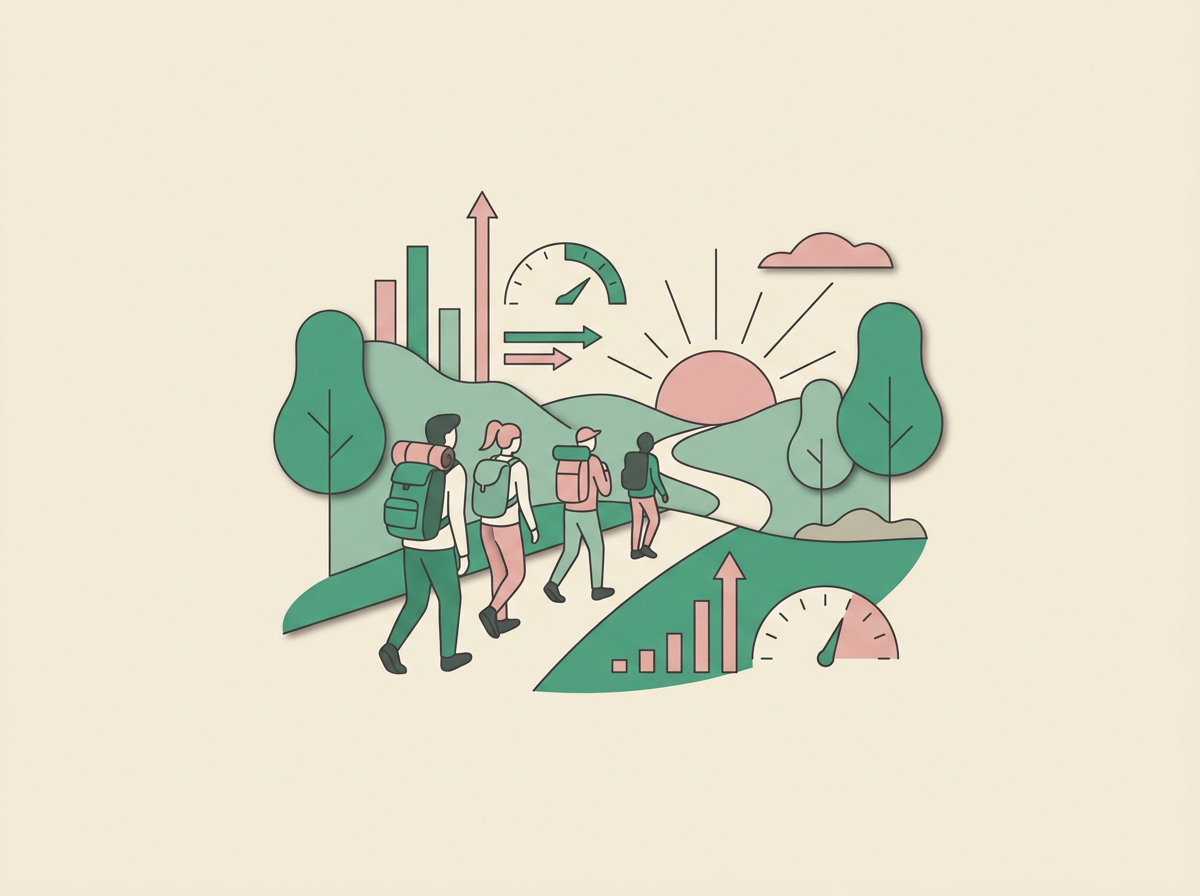
Rucking club walking on a trail at sunrise
"Data Exhaust: What Your Wearable Tells Insurers" in The Markup
If the Wired piece made you nervous, this investigative report from The Markup will make you paranoid—in a productive way. The reporters dig into the often-opaque data-sharing agreements between wearable tech companies, data brokers, and the insurance industry. The term 'data exhaust' refers to the secondary data users generate simply by using a device—location, daily routines, social connections—which can be packaged and sold to create startlingly accurate consumer profiles. It’s a stark look at how the tools of self-quantification can be turned into instruments of corporate surveillance. The key takeaway is not to abandon your wearable, but to become ruthlessly literate about its privacy settings and terms of service.
The friction between what technology can do and what a human should do is where the most interesting work is happening today.
What this means for you
Reading the industry tea leaves is one thing; applying it to your own life is another. The recurring theme this week is the tension between the scalable, data-driven solution and the bespoke, human-led experience. Neither is inherently superior, but it’s critical to know which one you’re engaging with and for what purpose. An AI might be great for tracking habits or providing basic information, but it's a poor substitute for the nuanced guidance of a professional who understands your unique context.
This is where self-awareness becomes the ultimate wellness practice. Before you adopt a new technology or methodology, ask what problem you're truly trying to solve. Are you seeking information, motivation, accountability, or connection? Your answer should guide your choices. A tool like the Codex intake is designed to help you clarify that intent, moving beyond the hype to match you with a single, vetted resource—be it a human coach, a local studio, or a specific product. In a world of infinite choice, the most valuable service is principled curation.
Verdict
This week’s reading paints a picture of a wellness industry at a crossroads, grappling with the profound implications of its own innovations. The most durable path forward likely isn't about choosing between the algorithm and the analogue, but learning how to blend them wisely. The future of well-being depends on it.
FAQ
What's the best way to stay informed about wellness without getting overwhelmed?
Focus on curated sources over algorithmic feeds. Prioritize understanding core principles rather than chasing fleeting fads, and don't be afraid to unplug and integrate what you've learned before seeking more information.
Are AI wellness coaches safe to use?
It varies greatly. Look for platforms that are transparent about their AI's limitations, have clear data privacy policies, and incorporate human oversight. Approach them as tools for information, not as substitutes for professional human judgment.
Is high-tech wellness better than traditional methods?
Not necessarily. High-tech tools are excellent for tracking data and identifying patterns, while traditional methods often excel at building community and intuitive self-awareness. A balanced approach that uses both is often most effective.
How does Codex vet the information and coaches on its platform?
Our editorial content, like our analysis on /trends, is based on industry research and journalistic principles. For professionals, we use a multi-tiered system that starts with public data and moves to direct verification of credentials and experience to ensure you're matched with a trusted, human expert.