The autumn air has a certain quality of distillation. As the days shorten, clarity seems to settle, not just in the crisp light but in the currents of our industry. The noise of summer launches fades, and the signals of what will truly shape the coming year become stronger. This week felt like one of those moments of quiet clarification, where disparate events begin to form a coherent, if complex, picture of where wellness is headed.
It was a week not of one single blockbuster announcement, but of several significant tremors across technology, law, and culture. Each, on its own, is a noteworthy development. Together, they sketch the outline of a future defined by a fascinating tension: the push for ultimate, data-driven personalization versus a powerful, concurrent pull towards human accountability, tangible impact, and real-world connection.
What's happening
The week's biggest headline in the tech world came from Amazon, which unveiled 'Aura', its long-rumored subscription service for creating a dynamic 'digital twin' of a user's health. By integrating data from wearables, home diagnostics, and Amazon's own vast ecosystem, the service promises predictive health insights and personalized recommendations. It's an ambitious, and to some, unsettling, leap into preventative medicine as a consumer service.
Meanwhile, in Brussels, the wellness app world was shaken by a landmark ruling from the EU's Court of Justice. In a precedent-setting case, the court found the developers of a popular AI-driven nutrition app partially liable for harm caused by its demonstrably flawed advice. The decision sends a clear message: algorithms offering health guidance can no longer operate in a legal gray area, and the era of 'for entertainment purposes only' disclaimers is drawing to a close.
Away from the courtroom and the cloud, a quieter but equally potent trend is gaining momentum. The Global Wellness Institute's latest report highlighted the rapid growth of 'regenerative travel,' a step beyond ecotourism or the standard wellness retreat. These experiences integrate travelers into active environmental restoration projects, from coral reef gardening in the Maldives to reforestation efforts in the Scottish Highlands. It's a redefinition of a 'restful' holiday, reframing it as one of active, positive impact. Finally, a Silicon Valley startup, Aethelred Labs, announced its long-awaited non-invasive glucose monitor has cleared regulatory hurdles in Europe and the US, promising to move metabolic health tracking from a niche concern for diabetics to a mainstream bio-optimization tool for everyone.
Why it matters now
These developments are not random; they are symptoms of a maturing industry grappling with its own power and responsibility. The global wellness market, valued by the GWI at over $6.6 trillion and projected to exceed $8 trillion by 2028, is no longer a cottage industry of yoga studios and juice bars. It is a technological and economic force, and with that scale comes scrutiny. Amazon's Aura represents the apex of data-driven wellness, a world where every biometric is a data point in a predictive model. It's the logical endpoint of the quantified-self movement, promising a future of fewer health surprises.
But the EU's ruling is the necessary counterbalance to that future. It introduces a crucial element of friction and accountability into the frictionless world of AI coaching. As automated advice becomes more sophisticated and pervasive, the question of who is responsible when it goes wrong becomes paramount. This legal precedent will likely slow the 'move fast and break things' ethos of tech development in the wellness space, forcing a greater emphasis on safety, efficacy, and, potentially, the irreplaceable value of human oversight. Together, these two events frame the central debate for the next decade of wellness: how do we harness the power of data without abdicating our judgment to the algorithm?
Our data may be in the cloud, but our bodies remain stubbornly on the ground, seeking real human guidance.
The Latest
The Digital Ghost in the Machine
Amazon's 'Aura' is less a single product and more of an ecosystem play. For a reported $39 monthly subscription, it will synthesize data from a user's existing health apps, wearables (including Amazon's own Halo line), and future at-home diagnostic kits. The sales pitch is proactive health management: Aura's AI will model potential health trajectories, flagging risks for metabolic syndrome, sleep apnea, or nutritional deficiencies long before symptoms appear. The platform's real power, however, lies in its integration with the rest of Amazon. Imagine Aura suggesting a Vitamin D supplement and placing it in your Whole Foods cart, or recommending a new mattress from Amazon.com based on sleep data. The potential for hyper-personalized, frictionless consumption is immense, but so are the privacy implications. The service is a bold statement about who consumers will trust with their most intimate data, and whether the convenience is worth the cost.
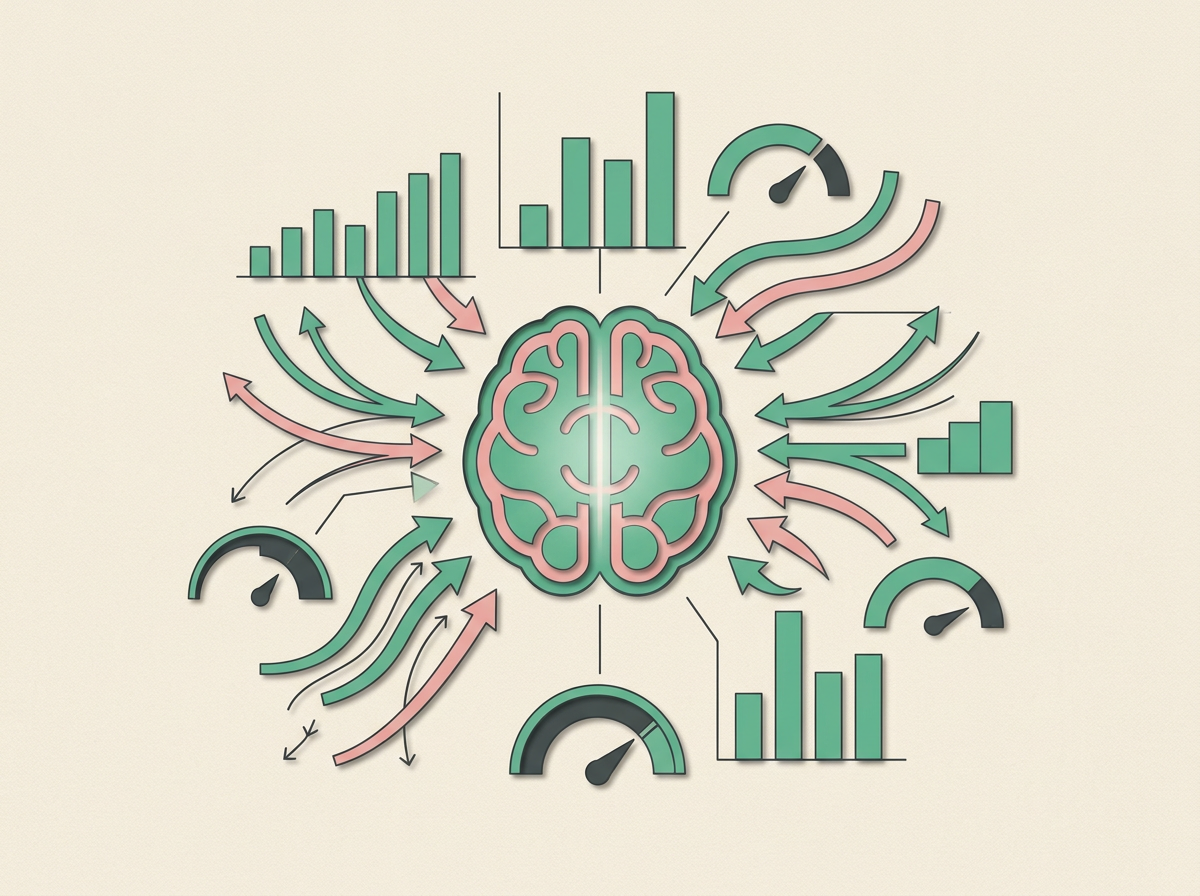
a minimalist diagram showing data inputs into a central AI brain
Who Watches the Watchers? AI on Trial
The Brussels ruling has sent a chill through the digital health startup scene. The case involved an app that, using AI, created a highly restrictive diet for a user that exacerbated an undiagnosed eating disorder. The court didn't place all blame on the developer, but it established a 'duty of care' that algorithm-based recommendations must meet. For years, the prevailing attitude was that AI coaches were tools, not practitioners. This ruling blurs that line. We can expect an immediate ripple effect: soaring insurance premiums for AI-first wellness companies, a renewed focus on hybrid models that keep a 'human in the loop,' and a greater appreciation for platforms that prioritize the verification and qualifications of their human experts. It validates the simple premise that a conversation with a trained, empathetic human is a fundamentally different—and safer—intervention than a push notification from a black-box algorithm.
Getting Your Hands Dirty, For Your Health
Regenerative travel is tapping into a deep-seated desire for purpose and connection that a week of massages and green juice can't always fulfill. It’s a move from passive wellness consumption to active participation. Studios and operators in this space, like the fictional 'Terra & Tide' collective in Costa Rica, are booking out months in advance. Their model is simple: guests spend mornings working with local biologists to restore mangrove forests and afternoons in yoga and meditation sessions. The psychology is sound; studies have long shown the mental health benefits of prosocial behavior and time in nature. This trend suggests a broadening of what 'wellness' means, expanding from the self to the collective and the environment. It's not just about feeling good, but about doing good, and finding well-being in the process.
The End of the Prick?
Aethelred Labs' 'GlucoFlow' patch is the kind of breakthrough that could fundamentally alter daily life. For years, continuous glucose monitors (CGMs) have been transformative for people with diabetes, but the invasive nature of the sensors—a small filament inserted under the skin—has been a barrier to mass adoption. The GlucoFlow uses a combination of micro-currents and enzymatic reactions on the skin's surface to provide real-time, medical-grade glucose readings without breaking the skin. Priced for the consumer market (around €150 for the reusable reader and €30 for a 14-day disposable patch), it will open the floodgates of metabolic data for the wellness-curious. Suddenly, the immediate impact of a croissant, a stressful meeting, or a HIIT session on your blood sugar will be visible on your phone. This will empower a new level of dietary personalization, but also risks creating a new wave of orthorexia and data anxiety.
In an age of automated advice, the most valuable commodity is not the data, but the trusted human who can interpret it.
What this means for you
The landscape is becoming more powerful, but also more complex. The promise of services like Aura and devices like the GlucoFlow patch is a world where you are the CEO of your own health, armed with unprecedented data. Yet the EU ruling is a stark reminder that data without wisdom can be dangerous. It underscores the critical need for a trusted human partner to help you make sense of it all, to separate the signal from the noise, and to provide context that no algorithm can.
This is the very challenge Codex was designed to solve. Our AI-driven [/intake] process can help you define your goals, but its ultimate purpose is to connect you with a single, perfectly matched human expert from our roster of verified coaches. These professionals are equipped to interpret complex biometric data, understand your unique context, and provide guidance that is both evidence-based and empathetic. For businesses looking to empower their teams to navigate this new world, our [/credits] program offers a flexible way to give employees access to this very human-centric ecosystem of support, from coaching to curated products and experiences.
Verdict
This week's events confirm that the future of wellness is a paradox. It will be more technologically integrated and data-rich than ever, yet the most valuable players will be those who champion human connection, accountability, and trust. As the tools for self-monitoring multiply, the true luxury will not be more data, but the clarity and wisdom to know what to do with it.
FAQ
What is a 'digital health twin'?
A digital health twin is a dynamic, virtual model of an individual's health. It's created by compiling data from various sources like wearables, medical records, and genetic information to simulate and predict health outcomes, offering personalized insights.
What does the EU ruling on AI liability mean for users?
The ruling means that developers of AI wellness apps can be held partially responsible if their automated advice causes harm. This offers users greater protection and forces companies to ensure their algorithms are safe and effective, rather than hiding behind disclaimers.
How is 'regenerative travel' different from ecotourism?
Ecotourism focuses on responsible travel to natural areas, minimizing impact ('leave no trace'). Regenerative travel goes a step further by aiming to have a net-positive impact, where travelers actively participate in restoring or improving the local ecosystem ('leave it better').
Is non-invasive glucose monitoring available to the public?
As of late 2026 in this scenario, companies like the fictional 'Aethelred Labs' are beginning to release the first consumer-grade, non-invasive glucose monitors that have cleared regulatory hurdles. They are moving from a medical device for diabetes to a mainstream wellness tool.