The deliveries arrive with a quiet persistence. A sleek, matte black box containing a set of biometric patches one day; an invitation to a beta-test for a generative fitness studio the next. Here at the Codex editorial desk, sorting the signal from the noise is the daily practice. Our mandate is simple, if not easy: to vet the bleeding edge of wellness so you don’t have to bleed your own wallet or patience finding what genuinely works.
This is not about chasing novelty. It is about identifying the tectonic shifts in how we understand and interact with our own health. We are in a constant state of review, applying a filter of rigorous skepticism and cautious optimism to the tools and teachers vying for your attention. What follows is a dispatch from our current testing docket—a snapshot of the trends and products that might just redefine the landscape in the years to come.
What's happening
For the past decade, the wellness narrative has been dominated by data collection. We have tracked our steps, our sleep, our heart rate variability, and our macros. We have amassed a veritable library of personal metrics, yet for many, this data remains a historical record—an interesting but inert log of what has already happened. The prevailing trend we are now seeing is the closing of this loop. The industry is pivoting from passive tracking to active, real-time feedback and prescription.
Technology is no longer just a dashboard; it is becoming a co-pilot. The convergence of more sophisticated sensors, faster processing, and smarter AI is creating a new paradigm. Instead of merely telling you that your sleep was poor, new systems aim to intervene with light or sound therapy. Instead of just logging your 5k time, they adjust your next workout based on your real-time physiological response. This shift is subtle but profound.
The implications are far-reaching. It’s affecting product design, with wearables becoming more integrated and less obtrusive. It’s changing studio programming, where classes can be dynamically tailored to the energy levels in the room. And it’s reshaping coaching, as practitioners are armed with objective data streams that complement their qualitative insights. We are moving from an era of self-quantification to one of guided self-optimization.
Why it matters now
This isn't a sudden revolution, but an accelerating evolution. According to the Global Wellness Institute's latest projections, the 'Personalized & Preventive Health' sector is expected to grow by another 15% by the end of 2026, driven almost entirely by technologies that offer bespoke guidance. Consumers, accustomed to the algorithmic personalization of media and commerce, now expect the same level of specificity for their well-being. The demand is there, and the technology is finally catching up.
The ACSM's annual trend report for 2026 reflects this, with 'AI-driven Programming' and 'Biomarker-based Training' breaking into the top five global fitness trends for the first time. It signals a market maturation. Early adopters have demonstrated the power of data-informed training, and now the tools are becoming accessible and user-friendly enough for the mainstream. This creates a massive opportunity, but also a minefield of over-marketed, under-validated products. Our role at Codex is to build the map through that minefield.
The conversation with your own body is becoming less of a monologue and more of a real-time, data-driven dialogue.
The picks
Our vetting process is exhaustive, covering everything from the science behind a claim to the user experience of an app. Here are four of the most compelling items currently under our microscope.
The Sensor: Lumenate Patch
For years, continuous glucose monitors (CGMs) have been the preserve of diabetics, with a recent crossover into the biohacker and elite athlete community. The next logical step has been the addition of lactate monitoring. The Lumenate Patch is one of the first consumer-grade devices we've seen that convincingly combines both into a single, disposable patch. It provides a real-time stream of both glucose and lactate data directly to your phone, offering an unprecedented window into your metabolic response to food and exercise.
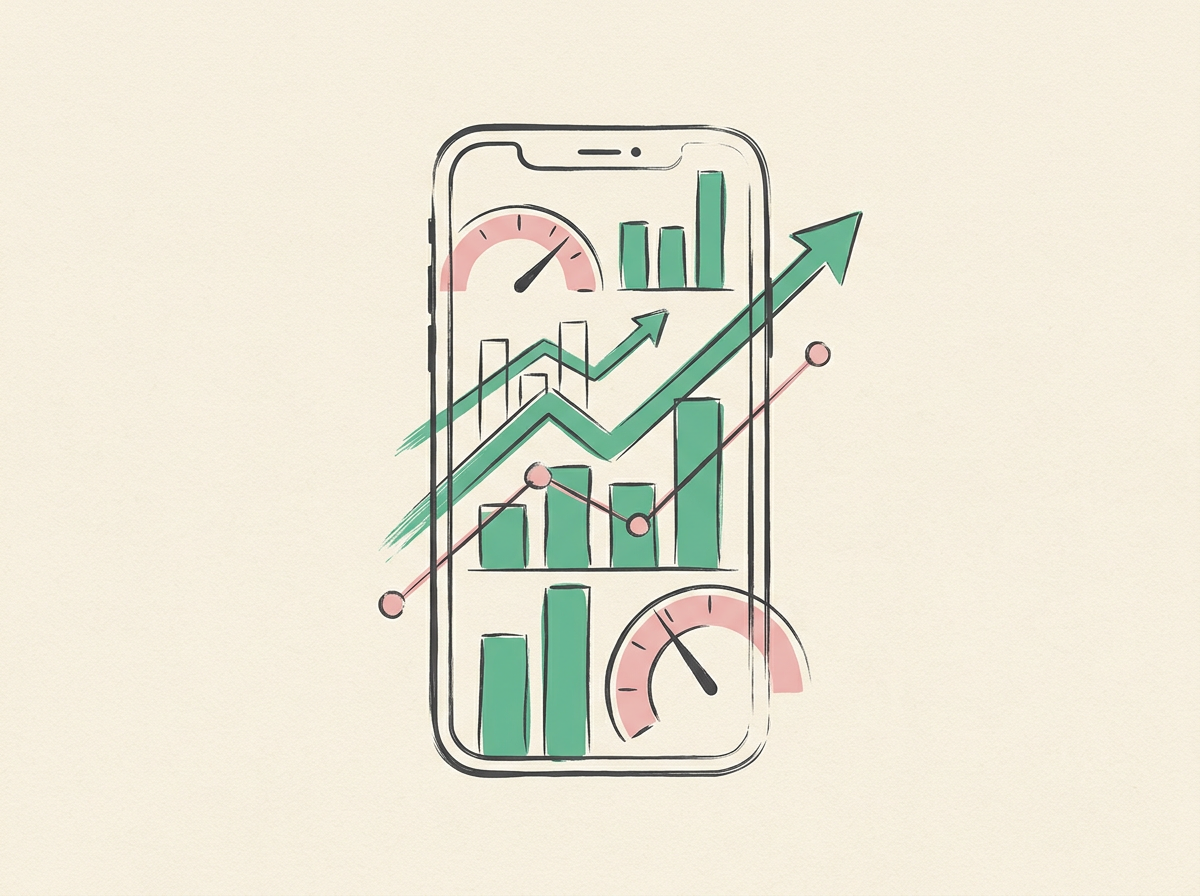
phone app displaying real-time glucose and lactate data
Seeing your lactate threshold—the point at which your body produces lactate faster than it can clear it—in real-time is a game-changer for endurance training. No more expensive lab tests. For the metabolically curious, watching the interplay between a meal's glucose spike and the subsequent exercise-induced lactate response is fascinating and, more importantly, actionable. The primary challenge? Data interpretation. The graphs are elegant, but knowing what to do with them requires a significant level of knowledge.
- Verdict: Potentially the most significant training innovation since the heart rate monitor, but it will create a new class of data-rich, knowledge-poor users.
- Who it's for: Competitive endurance athletes, personal trainers, and anyone serious about optimizing their metabolic health.
- Price band: ~$150 for a starter kit, with monthly subscriptions for patches.
The Studio: Studio Kinema
Imagine a HIIT class where the intervals are determined not by a preset timer, but by the collective heart rate of the room. This is the promise of Studio Kinema, a new concept in boutique fitness that uses generative AI to create and modify workouts on the fly. Members wear a simple biometric band, and the studio's central AI—dubbed 'The Director'—analyzes the group's aggregate output, fatigue levels, and movement quality via ceiling-mounted optical sensors.
Workouts are projected onto the walls, with instructions and visualizations adapting in real-time. If the system detects flagging form, it might simplify the movement. If the group's energy is high, it might introduce a new challenge. Haptic flooring provides subtle cues for foot placement and rhythm. It's an ambitious attempt to deliver the benefits of personal training at a group-class scale. The vibe is futuristic and focused, but it can also feel slightly impersonal, like exercising inside a very intelligent machine.
- Verdict: A fascinating glimpse into the future of group fitness that successfully personalizes the experience, though it may lack the human touch some crave.
- Who it's for: Tech-savvy fitness enthusiasts bored with cookie-cutter classes and those who thrive on data-driven motivation.
- How to book: Currently in private beta in London and Seoul; public launch expected Q1 2027.
The Methodology: Neuro-Somatic Coaching
While hardware gets the headlines, innovation in coaching methodologies is just as critical. We're seeing a rise in what practitioners are calling 'Neuro-Somatic Coaching,' an approach that seeks to make the mind-body connection tangible. We've been in sessions with Dr. Aris Thorne, a clinical psychologist and one of the pioneers in this space. His practice integrates traditional somatic experiencing—a therapy focused on releasing trauma stored in the body—with real-time feedback from a portable EEG headset.
During a session, the client can see a simplified visual representation of their brainwave activity. The coach then guides them through somatic exercises, and both coach and client can observe how different movements or breathing techniques measurably shift the client from a state of hyper-arousal (beta waves) to one of calm and focus (alpha waves). It's a powerful feedback loop that demystifies mindfulness and provides objective proof that these techniques are working. It makes the intangible, tangible.
- Verdict: A compelling fusion of ancient wisdom and modern neuroscience that could significantly accelerate progress in therapy and mental performance coaching.
- Who it suits: Individuals dealing with stress, anxiety, or trauma, as well as executives and athletes looking to improve focus and emotional regulation.
- How to book: Through specialized practitioners. Finding a verified coach with cross-disciplinary training is essential.
For all the data, the most important algorithm remains the trusted human who can help you make sense of it all.
What this means for you
This wave of hyper-personalization is undeniably exciting. The potential to have our workouts, nutrition, and mental health practices tailored specifically to our unique physiology is immense. However, it also introduces a new layer of complexity and a significant risk of data-overwhelm. A graph of your lactate curve is useless, or even misleading, without the context of your training goals, sleep quality, and stress levels. An AI-generated workout is only as good as the data it receives and the logic of its programming.
The challenge for the modern wellness consumer is no longer a lack of information, but a surplus of it. The key is to find a trusted filter—a person or a platform that can help you separate the genuinely useful from the technologically novel. Before diving into a new data stream, ask yourself what question you are trying to answer. Are you trying to break a marathon PR, or simply feel more energetic in the afternoons? The tool must fit the job. This is the philosophy behind our AI intake, which starts not with solutions, but with your specific context and goals, matching you to a single, vetted option.
Verdict
The future of wellness is intelligent, responsive, and deeply personal. The tools we're seeing today are powerful and promising, moving us toward a world where our health choices are guided by real-time, objective data. But technology is a compass, not a map. It can tell you which way you're heading, but it can't tell you if the destination is worth the journey. That still requires human wisdom, expert guidance, and a clear sense of your own 'why'.
FAQ
What is a lactate monitor and why is it useful?
A lactate monitor measures the concentration of lactic acid in your body, a byproduct of intense exercise. Tracking it in real-time helps athletes identify their precise training zones and lactate threshold, allowing for more efficient and effective endurance training without costly lab tests.
Is AI-driven fitness safe?
When designed responsibly, it can be. Good systems use sensors to monitor form and adjust intensity to prevent injury. However, the quality of the AI's programming is critical, and it can't replace the nuanced eye of a human coach for complex movements or individuals with pre-existing conditions.
What's the difference between a claimed and a verified coach on Codex?
Any coach can create a profile and have it 'crawled' or 'claimed'. A 'verified' coach has undergone a rigorous vetting process by the Codex team, which includes credential checks, reference interviews, and a review of their professional practice to ensure they meet our highest standards.
How does Codex decide which products and trends to feature?
Our editorial and research teams constantly scan the market for emerging trends and products. We select items for testing based on the novelty of the science, the credibility of the founding team, early user feedback, and their potential to solve a genuine problem for our audience. Only a fraction of what we test makes it into our editorial coverage or marketplace.