The surface of the large central desk in our Berlin office is a physical manifestation of the wellness zeitgeist. It’s a chaotic, yet curated, landscape of half-used supplement bottles, sleek wearables in their charging cradles, and prototypes of apparel still smelling faintly of the factory. On screen, calendars are a patchwork of trial class bookings, consultation calls with potential coaches, and deep-dive sessions with data scientists parsing the efficacy of a new bio-feedback app.
This is the engine room of Codex. Before any product, studio, or professional appears on our platform, it passes through this gantlet. We are not merely aggregating what exists; we are curating what works. This quarterly dispatch is a window into that process—a look at what we're currently testing, questioning, and validating on your behalf.
What's happening
Curation, in the context of modern wellness, has become a diluted term. For many, it means scraping the internet for popular brand names and affiliate links. At Codex, it’s a verb, an active process of human-led, data-supported vetting. Our process begins with a wide net, capturing signals from academic journals, industry reports, and the quiet hum of niche communities. From there, we begin the methodical process of filtering.
For a physical product, this means hands-on testing by multiple team members over weeks or months. We’re looking for build quality, user experience, and most importantly, tangible outcomes. Does this recovery tool actually reduce DOMS? Does this supplement clear the afternoon brain fog without a crash? We’re comparing the marketing claims against our lived experience.
For studios and coaches, the process is even more involved. We attend classes anonymously, book introductory sessions, and scrutinize credentials. We look for the things that can’t be easily quantified on a marketing one-sheet: the quality of instruction, the community atmosphere, the safety protocols, and the integrity of the methodology. This leads to our tiered system of trust for professionals—from a basic crawled profile to a fully verified partner who has passed our most stringent checks.
Why it matters now
The wellness industry is, by any measure, enormous. The Global Wellness Institute (GWI) valued the market at over $5.6 trillion in its last major report, a figure that has only grown. This explosive growth has created a paradox of choice for consumers. Faced with a million different yoga mats, a thousand meditation apps, and a seemingly infinite roster of coaches all promising transformation, the most common outcome is not enlightenment, but paralysis. The noise is deafening.
This is where trust becomes the most valuable commodity. In an ecosystem rife with pseudoscience and aggressive marketing, an impartial, rigorous filter is no longer a luxury; it's a necessity. Our entire business model is predicated on being that filter. We absorb the risk—the time spent in bad classes, the money spent on ineffective products—so you don’t have to. When we match you with a coach or product through the Codex intake, that recommendation is the end result of a long and deliberately critical process.
Curation isn't about finding what's popular; it's about validating what's effective, and quietly discarding the rest.
The Test Bench
Our current testing rotation reflects the industry's trajectory: a deeper integration of technology, a focus on cognitive performance, and a move towards more nuanced, somatic approaches to mental health. Here’s what’s on the desk this month.
The Device: Oura Ring Gen 4 Horizon
Another generation, another marginal gain? That’s the question we ask with every wearable update. The rumored Gen 4 of the Oura Ring, which our contacts suggest is landing this fall, promises a few key upgrades. The primary focus appears to be on its stress-monitoring algorithms, purportedly moving beyond simple heart-rate variability (HRV) to incorporate electrodermal activity (EDA) data from a new, almost invisible sensor on the inner band. It also claims to have finally cracked reliable daytime nap detection and integrated it into the overall Readiness Score.
We're testing a pre-production model to see if these new data streams provide actionable insights or just more charts to obsess over. The promise of an accurate 'Metabolic Flexibility' score, derived from temperature and heart rate trends post-meal, is particularly intriguing. But as always, the test is whether the device prompts beneficial behavior change or simply fuels neuroticism.
Verdict: Potentially a significant upgrade for data-driven users, but the jury is out on whether it offers more signal than noise. For: Biohackers, quantified-self enthusiasts, and anyone trying to correlate lifestyle inputs with recovery outputs. Price Band: €349–€549
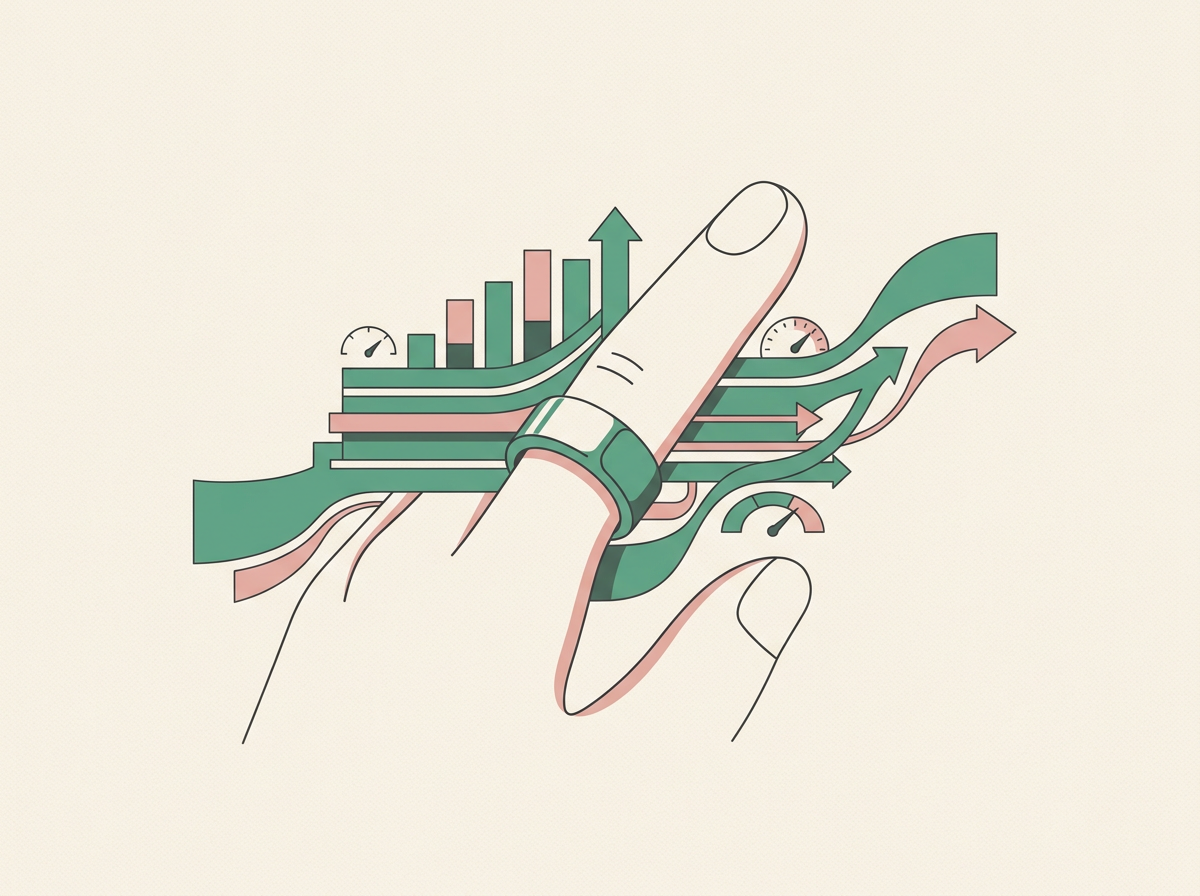
a minimalist photo of the Oura Gen 4 ring on a finger
The Supplement: Momentous x Huberman Lab 'Neural Network'
Following their successful collaboration on sleep and focus stacks, Momentous is rumored to be releasing a new flagship nootropic formulated with Andrew Huberman's lab. Tentatively named 'Neural Network,' this formula allegedly moves beyond acute focus and aims for long-term support of neuronal health. Leaked ingredient lists suggest a combination of Magtein (Magnesium L-Threonate), a highly bioavailable form of Citicoline, and phosphatidylserine.
The thesis is sound and grounded in established neuroscience. Unlike stimulant-based products, this is designed for cumulative effect. We're midway through a 90-day trial with a dozen team members. We're logging subjective reports on clarity and word recall, while also tracking cognitive performance scores using a standardized brain-training app. The challenge with any nootropic is separating the placebo effect from genuine efficacy. The Momentous brand, built on rigorous third-party testing and transparent sourcing, gives it a head start on trust.
Verdict: A scientifically robust formulation, though its real-world benefits will be subtle and require consistent long-term use. For: Professionals, students, and aging individuals looking for a non-stimulant cognitive support system. Price Band: €60–€80 (monthly supply)
The Studio: Sanctum, Lisbon
In a converted warehouse in Lisbon's Marvila district, a new studio called Sanctum is taking an architectural approach to wellness. It eschews the typical gym or yoga studio aesthetic for something more akin to a modern art installation or a secular monastery. The core offering is a single, 90-minute programmed experience that combines contrast therapy (sauna and cold plunge) with guided breathwork and a final session in a sensory deprivation tank.
It’s the antithesis of a drop-in gym. You book a journey. We’ve had three different editors attend sessions. The reports are consistent: the space itself—all poured concrete, indirect lighting, and enforced silence—is a huge part of the experience. It forces a mental downshift before the session even begins. The instructors act more like stoic guides than peppy trainers, leading the small group through precise breathwork protocols designed to either ramp up the nervous system in the heat or calm it in the cold. It’s brutally effective and leaves you in a state of profound calm. We are currently evaluating their instructor training, safety procedures, and hygiene protocols to see if they meet our standards for inclusion in our curated studio list.
Vibe: Brutalist, minimalist, and deeply calming. Programming: A structured, guided journey through heat, cold, breath, and sensory deprivation. Who it suits: The chronically stressed who find traditional meditation challenging and need a powerful physiological reset.
The Methodology: 'Somatic Unwinding' Coaching
Perhaps the most nuanced trend we’re vetting is a coaching methodology gaining traction in therapeutic circles: Somatic Unwinding. It sits at the intersection of somatic experiencing, trauma-informed therapy, and mindfulness. It is not exercise. It is not talk therapy in the traditional sense. It's a guided practice aimed at releasing deeply held physical tension and trauma stored in the body's tissues.
We are currently vetting a handful of practitioners, including a London-based PhD, Dr. Elena Vance, who is pioneering a certification program. A typical session involves lying on a mat while the coach provides quiet verbal cues to draw your attention to specific micro-sensations in the body—a tightness in the jaw, a warmth in the shoulder. The goal is to develop interoception—the sense of the internal state of the body—and allow for a spontaneous 'unwinding' of held patterns without forceful stretching or manipulation. It's subtle, powerful work, and vetting it requires a deep dive into a coach's credentials, their understanding of scope of practice (i.e., not claiming to be a psychotherapist), and confidential feedback from their clients. We're assessing if this is a valid, scalable, and safe modality to feature among our verified coaches.
The best wellness tools aren't the ones you notice during use, but the ones whose absence you feel most acutely.
What this means for you
The purpose of this exhaustive, and at times exhausting, process is to build a platform you can trust implicitly. When you complete your Codex intake, the single match we provide—be it a specific wearable, a local studio, or a vetted online coach—is the product of hundreds of hours of this behind-the-scenes work. We test a dozen supplements so we can recommend the one that works. We visit twenty yoga studios to find the one with impeccable instruction. We interview fifty coaches to find the one with the precise methodology you need.
This commitment to quality is also the foundation of our B2B offering. When a company provides its employees with Codex Credits, they're not just giving them a wellness stipend; they're giving them access to a pre-vetted ecosystem of excellence. It removes the friction and uncertainty from the equation, ensuring that their investment in employee wellbeing has a real, tangible impact. Our curation is your shortcut to what's truly best in class.
Verdict
The wellness landscape is a frontier of innovation, but also a minefield of hyperbole. Our role at Codex is to be your cartographer and your clearing crew. By stress-testing the latest products, interrogating new methodologies, and auditing the spaces where wellness happens, we filter the signal from the noise. This constant cycle of testing is our core commitment: to ensure that when we make a recommendation, it is the right one.
FAQ
How does Codex choose what to test or review?
Our curation team uses a mix of industry trend analysis, direct user requests, expert consultations, and scanning academic research to identify promising new products, methods, and providers for vetting.
Do brands pay to be featured or tested by Codex?
No. Our editorial and curation processes are strictly independent. We do not accept payment for testing or positive reviews to ensure our recommendations remain unbiased and trustworthy.
How long does it take to vet a coach or studio?
The timeline varies significantly depending on the provider. It can take several months and involves multiple steps, including credential verification, anonymous session audits, methodology review, and analysis of client feedback.
What happens if a product or studio fails the Codex vetting process?
If something doesn't meet our standards for quality, safety, and efficacy, it is simply not included on the Codex platform. We don't publish 'negative reviews'; we just quietly discard what doesn't make the cut.