The conference room table is a controlled mess. To the left, a swatch of matte black fabric that hums with a faint, almost imperceptible current. In the center, a sleek countertop device that looks like a high-end coffee machine but smells faintly of lion's mane and rhodiola. To the right, a stack of pitch decks from studios promising transcendence via strobe lights and kettlebells. This is a typical Tuesday at Codex—the front line of our vetting process.
Every week, we sift through the latest aspirants to the wellness throne. It's a deluge of data, devices, and doctrines, each claiming to have unlocked the next level of human potential. Our job is not to get excited. It is to be discerning. We are the filter, the patient gatekeepers standing between the relentless churn of the industry and your well-being. This is a glimpse of what’s currently on our desk and on our minds.
What's happening
The wellness economy is no longer a niche cottage industry; it's a multi-trillion-dollar behemoth, a sprawling ecosystem of apps, wearables, supplements, studios, and gurus. With that scale comes saturation. The barrier to entry for launching a new protein powder or mindfulness app is vanishingly low, leading to a marketplace that is as crowded as it is confusing. A new wearable launches every quarter. A new superfood is anointed every month. A new fitness modality goes viral on social media every week.
This Cambrian explosion of wellness options presents a paradox of choice for consumers. More information does not necessarily lead to better decisions. In fact, it often leads to analysis paralysis or, worse, investment in products and services that are long on marketing and short on efficacy. The language of science is frequently co-opted to sell pseudoscience, making it nearly impossible for the average person to distinguish between a legitimate biometric insight and a clever gimmick.
Our process at Codex is designed to counteract this. We operate on a simple premise: curation is a service. We look at everything through three lenses: products (the tools), places (the studios), and people (the coaches). For every hundred pitches we see, perhaps one or two will warrant a deeper look. The rest are politely filed away, relegated to the great digital slush pile of good intentions and flawed execution.
Why it matters now
According to the Global Wellness Institute, the global wellness economy is projected to continue its formidable growth, with consumers showing a clear preference for services and products that offer personalization and preventive care. The sector for 'Personalized, Preventive and Public Health' is among the fastest-growing. Yet, consumer trust remains fragile. A market flooded with unsubstantiated claims and influencer-driven hype erodes the credibility of the entire industry.
This is the critical juncture where we find ourselves. The technology has, in many cases, outpaced the science, or at least the verification of that science. We have devices that can track dozens of sleep metrics but a limited understanding of how to act on that data meaningfully. We have supplements that promise cognitive enhancement based on studies with small sample sizes. This gap between potential and proof is where careful, sober curation becomes not just useful, but essential.
The future of wellness isn't about more data points; it's about better questions and a handful of trusted answers.
The picks
Here’s a snapshot of what’s made it past the initial filters and is currently undergoing our rigorous testing methodology. These are not endorsements—not yet. They are simply the most interesting signals we've picked up from the noise.
Product: Somatex Recovery Apparel
Imagine a pair of compression tights or a long-sleeve shirt that actively helps your muscles recover while you sleep or sit at your desk. That's the premise of Somatex, a startup out of a German sports science lab. The apparel is woven with micro-carbon filaments that deliver a low-level electrical current, purportedly increasing blood flow and accelerating the removal of metabolic waste from muscle tissue. It feels like nothing, a faint warmth at most, but the biometric data from our initial tests shows a measurable, if modest, impact on overnight HRV and resting heart rate.
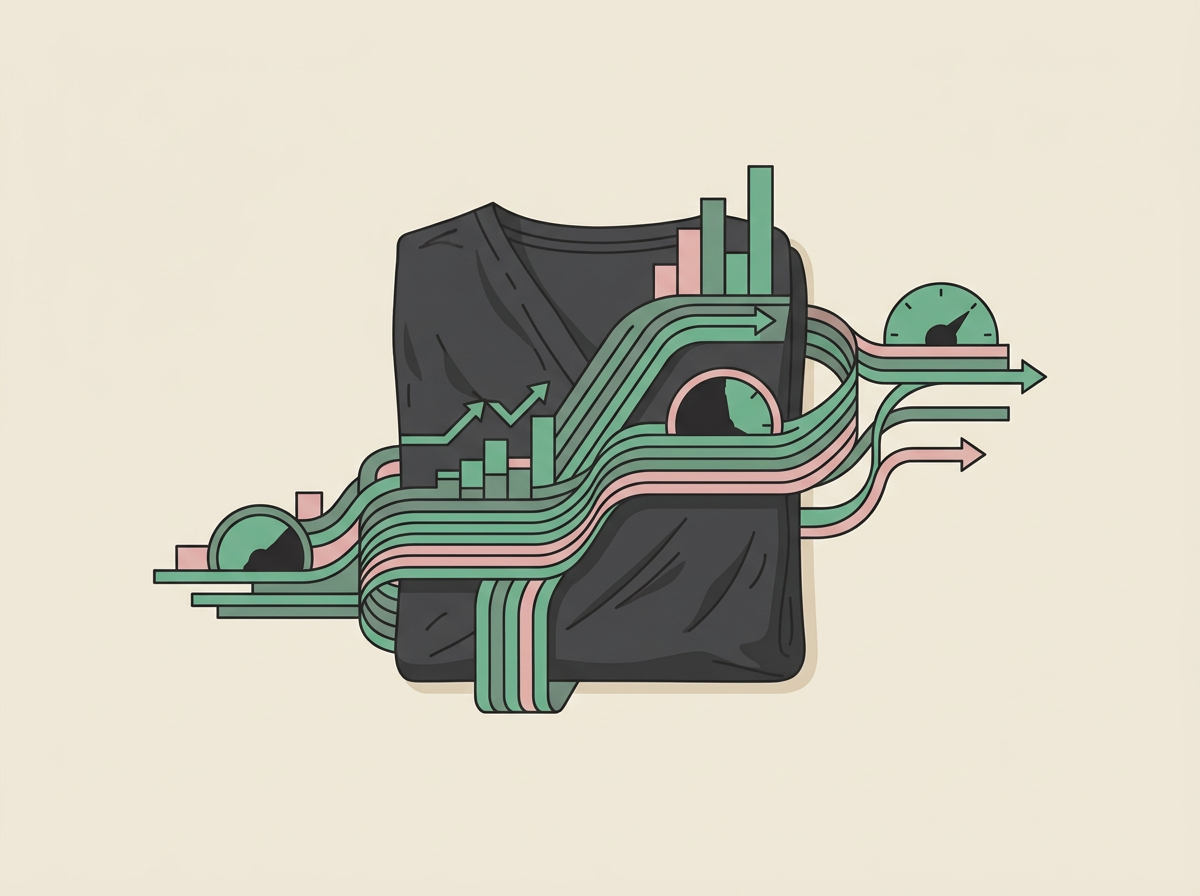
A minimalist shot of folded black apparel
- Verdict: A compelling application of smart textile technology for passive recovery, though its real-world impact beyond elite athletes is still under review.
- For: The bio-optimizer, the over-40 athlete, anyone looking to maximize recovery with minimal effort.
- Price: $$$$ (Specialist)
Studio: Studio Chroma, London
Boutique fitness is searching for its next act, and Studio Chroma might be a glimpse of it. Part art installation, part functional training space, Chroma uses bio-responsive lighting and generative art projected onto its walls to create an immersive workout environment. Your heart rate, collected via a provided chest strap, dictates the color, speed, and intensity of the visuals. A HIIT segment might plunge the room into a pulsing red, while a cooldown brings forth slow, undulating blue and green fractals. The focus is less on competitive metrics and more on achieving a flow state, syncing your physical effort with the sensory environment. It’s a compelling move away from the leaderboard-obsessed culture of many studios.
- Verdict: A beautifully executed concept that merges fitness with aesthetics, creating a workout that feels both meditative and intense.
- Who it's for: The aesthetically-minded exerciser bored with conventional gyms, individuals motivated by sensory experience rather than raw numbers.
- Booking: Via their proprietary app; currently waitlist-only.
Methodology: Attentional Fitness Coaching
This isn't a product or a place, but a person—or rather, a new coaching discipline we're seeing emerge. A handful of our top-tier coaches are beginning to specialize in 'Attentional Fitness.' This goes beyond basic mindfulness or productivity hacks. It's a structured training regimen for the modern knowledge worker's most valuable asset: their focus. These coaches, often with backgrounds in neuroscience or sports psychology, use a combination of cognitive exercises, biometric feedback (usually from EEG headbands or even just HRV), and structured work protocols to help clients improve their ability to concentrate, resist distractions, and manage cognitive load. It's personal training for your brain, designed to combat the digital exhaustion that defines modern work.
- Verdict: A timely and necessary evolution of performance coaching that addresses a core problem of contemporary life.
- Who it's for: Knowledge workers, executives, creatives, and anyone who feels their ability to think deeply is eroding.
- How to book: A small but growing number of verified coaches are beginning to list this as a specialty.
Technology can track the body, but a great coach is still the best interface for navigating the complexities of the human spirit.
What this means for you
Navigating this landscape alone can be exhausting. The temptation is to either jump on every new trend or dismiss it all as hype. We suggest a third way: strategic curiosity. You don't need to be the first adopter of every new device, but it pays to understand the direction the industry is heading. Somatex points to a future of passive, integrated health solutions. Studio Chroma shows that the spaces where we move our bodies are becoming as curated as the workouts themselves. And the rise of attentional fitness confirms that the greatest performance challenges are now mental, not just physical.
This is why we built Codex. Instead of spending hours reading conflicting reviews and research, you can start with our AI-powered /intake, which uses your specific goals and preferences to find the single best match for you, whether that's a product, a studio, or a human expert. Our reviews and guides, like our deep-dive on sleep trackers in /vs/reviews, are designed to give you a clear, unbiased perspective. The goal is to empower you to make one good decision, not to overwhelm you with a thousand options.
Verdict
The most promising innovations are not always the loudest. They are often quiet, thoughtful solutions to real-world problems. The future of wellness, as we see it, is a careful synthesis of high-tech personalization and high-touch human guidance. Our commitment is to continue testing, vetting, and verifying, so that when we do present you with a match, you can trust it's one worth your time and attention.
FAQ
How does Codex vet the products and services it features?
Our process is multi-stage. It begins with market research and expert consultation, followed by hands-on, real-world testing. We evaluate items on efficacy, usability, scientific backing, and overall value before considering them for the platform.
What is the difference between a crawled, claimed, and verified coach on Codex?
These are our trust tiers. 'Crawled' means we've indexed a publicly available professional profile. 'Claimed' means the coach has taken ownership of their profile. 'Verified' is our highest tier, indicating the coach has passed a multi-point verification process by our team.
What is 'attentional fitness'?
Attentional fitness is a type of cognitive performance coaching that trains your ability to focus, manage distractions, and perform deep work. It uses principles from neuroscience and psychology to strengthen your mental 'muscles' for concentration.
Is all this new wellness technology necessary to be healthy?
No. The fundamentals—sleep, nutrition, movement, community—are always the most important. Technology can be a powerful tool for optimization and insight, but it should be a supplement to, not a replacement for, healthy foundational habits.