The conference table at Codex HQ is, as usual, a controlled mess. A sleek, matte-grey headband sits next to a vial of what looks like water but is apparently a personalised bacteriophage solution. A stack of research papers on neuro-acoustics props up a tablet displaying the floor plan of a studio in Berlin. This is the physical manifestation of our vetting process: a constant, quiet churn of testing, tasting, and trying, all in an effort to separate the signal from the noise.
Our work is to anticipate, to understand where the current of wellness is flowing and to map the reliable currents from the fleeting eddies. What lands on this table is a microcosm of the industry's obsessions and innovations. And as we head towards the end of 2026, a clear theme is emerging: a move away from the noise of data collection and towards the quiet hum of integration and effect.
What's happening
For the last decade, wellness technology was defined by measurement. We tracked our steps, our sleep stages, our heart rate variability, our blood glucose. We gamified our existence, chasing green circles and higher readiness scores. While valuable, this firehose of data has led to a new kind of fatigue. People are drowning in metrics, often without a clear understanding of how to translate them into meaningful change. The novelty of knowing your REM sleep to the minute has worn off, replaced by a more pressing question: So what?
The most interesting companies, coaches, and concepts we're seeing now are answering that question. They are building on the foundation of data but moving into the next logical phase: application. The focus is shifting from pure performance analytics (VO2 max, FTP) to more holistic and fundamental markers of health, chief among them the state of the autonomic nervous system. Is it locked in a sympathetic (fight-or-flight) state, or can it flexibly shift into a parasympathetic (rest-and-digest) response?
This shift manifests in three key areas. First, technology is becoming less obtrusive and more intuitive, offering gentle guidance rather than stark reports. Second, physical spaces are being engineered not just for exercise, but for targeted sensory and nervous system recovery. And third, coaching is becoming more vital than ever, acting as the human layer that interprets complex data and tailors protocols for the individual, blending high-tech feedback with high-touch somatic practice.
Why it matters now
The cultural context for this evolution is clear. The promised techno-utopian future of optimised productivity has, for many, resulted in chronic burnout and a persistent, low-grade anxiety. The endless pursuit of more—more data, more output, more intensity—has hit a wall of human biology. The Global Wellness Institute (GWI) has noted a significant consumer pivot towards solutions that promise restoration and balance over pure enhancement, a market segment projected to outpace traditional fitness growth significantly by 2030. It's a collective realisation that you cannot simply hack your way out of exhaustion.
This creates a challenging landscape for the consumer. The market is saturated with products and personalities making grand claims. It’s also an opportunity for genuine innovation to flourish. The companies that succeed will be those that respect the user's attention and cognitive load, offering tools that integrate seamlessly into life. They will provide not just information, but transformation, however subtle. For us at Codex, this underscores the importance of curation. Our job is to be the filter, ensuring that what reaches our members is not just novel, but necessary and effective.
We're drowning in data but thirsty for wisdom. The next wave of wellness is about finding the signal in the noise.
The Picks
After months of internal testing and debate, here are three specific examples of this new direction that have held our attention.
The Device: Sona Haptics Focus Band
The Sona band doesn't have a screen. It doesn't buzz you with notifications. Its sole purpose is to help you regulate your breathing and attention through subtle, almost imperceptible, haptic feedback. Worn on the forehead or wrist, it uses a series of gentle, rhythmic pulses to guide your breath into a coherent pattern, a state known to improve focus and calm the nervous system. The idea is to train your attention, not distract it.
During a work block, you might set it to a 'Focus' session. Instead of an alarm, a slow, gentle pulse begins, guiding your inhale and exhale. If its internal sensors detect physiological signs of distraction or stress (a subtle change in heart rate patterns), the pulse might shift slightly, a non-verbal cue to return to the breath. It's ambient, like the way a quiet, steady rhythm in a coffee shop can aid concentration. We found it surprisingly effective at short-circuiting the cycle of distraction that begins with a wandering mind and ends with twenty minutes lost to a social media scroll.
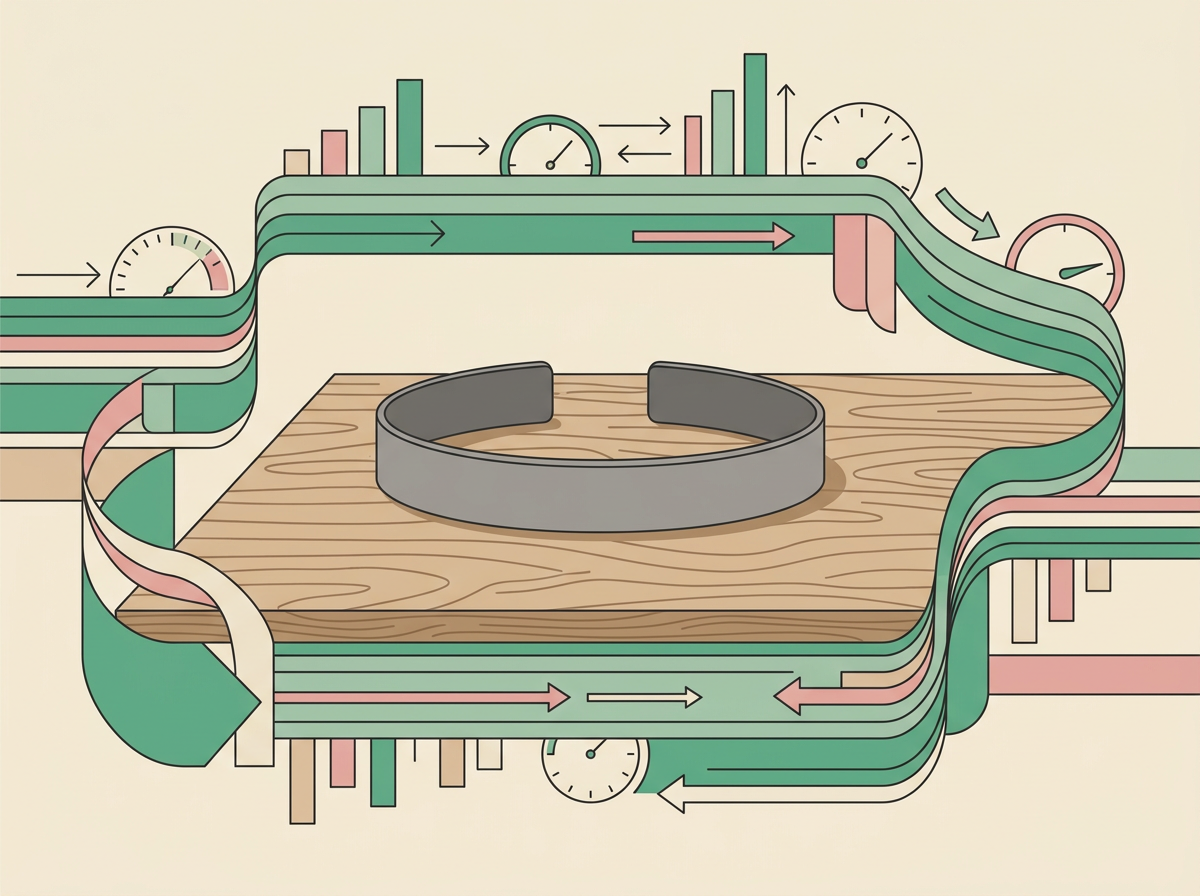
a minimalist matte grey headband on a wooden desk
- Verdict: A promising tool for deep work and mindfulness, moving wearables from tracking to training.
- For: Knowledge workers, creatives, meditators, and anyone battling digital distraction.
- Price Band: €250–€350
The Studio: Haven, Berlin
Haven isn't a gym. There are no squat racks or treadmills. Billing itself as a 'Nervous System Lab', this appointment-only studio in Mitte is dedicated entirely to recovery and sensory re-calibration. The space is divided into four distinct environments, each designed to elicit a specific physiological response. Members, guided by data from their initial intake, move through a prescribed circuit.
The 'Light' room uses dynamic, programmed lighting that shifts in colour temperature and intensity to align with circadian biology, either gently waking the system or preparing it for sleep. The 'Sound' room features neuro-acoustic chairs that transmit low-frequency vibrations through the body, a deeply calming experience that feels like being submerged in a cello. The 'Thermal' zone offers a circuit of contrast therapy—infrared sauna, cold plunge—but with protocols guided by your real-time HRV data. Finally, the 'Stillness' room is a true sensory deprivation chamber, an anechoic space for profound mental rest. The experience is methodical, data-informed, and profoundly restorative.
- Verdict: The future of the urban third space, where recovery is treated with the same precision as training.
- For: Burnt-out executives, over-trained athletes, and anyone seeking a deep, systematic reset.
- How to book: Through referral or curated platforms with studio partnerships.
The Coach: Dr. Elena Rios, Autonomic Conditioning
Dr. Rios represents the new vanguard of performance coaching. With a PhD in neurophysiology, she bridges the gap between clinical science and practical application. Her practice, which she calls 'Autonomic Conditioning', uses data from wearables not as a report card, but as a starting point for a conversation. She's less interested in your peak heart rate during a workout and more interested in how quickly it comes down afterwards.
A typical session might involve reviewing Whoop or Oura data to identify patterns—poor HRV after late meals, a sympathetic stress response to certain types of meetings—and then workshopping solutions. But these solutions aren't just 'eat earlier' or 'meditate more'. She uses somatic exercises, targeted breathwork protocols, and even environmental tweaks (like changing the lighting on your computer screen) to retrain the nervous system's responses over time. She helps clients understand the 'why' behind the data and gives them the tools to change their state proactively.
- Verdict: A masterclass in making data actionable, blending tech insight with human-centric guidance.
- Who it suits: High performers who feel they've hit a plateau and suspect the limiting factor is recovery, not effort.
- Trust Tier on Codex: Verified. Dr. Rios is part of a select group of coaches who have undergone our most rigorous background and methodology review.
Technology can show you the map, but a great coach is the one who helps you read the terrain.
What this means for you
The emergence of these more nuanced, integrated approaches is good news. It signals a maturation of the wellness industry. However, it also adds another layer of complexity to navigate. It’s no longer just about which gym to join, but about which recovery modality, which coaching philosophy, and which technology is right for your specific biology and lifestyle. Chasing every new trend is a recipe for the very burnout they claim to solve.
This is where curation and personalization become essential. A tool like the Codex AI-powered /intake is designed for this exact purpose: to understand your unique context and goals, and then filter the vast world of wellness down to a single, relevant match. It might connect you with a /coach like Dr. Rios who specializes in nervous system regulation, or suggest a local /studio that incorporates some of the principles seen at Haven. For businesses looking to provide meaningful wellness support for their teams, providing a flexible wallet like /credits allows employees to choose the solutions that resonate most, rather than a one-size-fits-all approach.
Verdict
The future of wellness is quieter than its recent past. It's less about shouting metrics from a screen and more about the subtle, internal shift towards balance. The most promising innovations we see are not just creating more data, but more wisdom. They are tools and methods that help us listen to our bodies, not just measure them. This integrated, restorative, and highly personalized approach is what we believe defines the next chapter, and it's the standard we'll be using to vet what's next.
FAQ
Is all this new wellness tech just creating more digital noise?
On the contrary, the trend we're seeing is a move towards 'quiet tech'. The goal of devices like the Sona band is to reduce cognitive load and distraction by offering subtle, ambient guidance rather than more screens and notifications.
What is 'nervous system regulation' and why does it matter?
It's the practice of actively training your body's autonomic nervous system to shift flexibly between a 'fight-or-flight' (sympathetic) state and a 'rest-and-digest' (parasympathetic) state. It matters because chronic stress can lock us in a sympathetic state, impacting sleep, digestion, recovery, and long-term health.
How does Codex decide which products, studios or coaches to feature?
Codex uses a multi-stage vetting process that starts with crawling industry data and moves to manual review. For our highest 'Verified' tier, we conduct in-person visits, interviews, and methodology deep-dives to ensure efficacy, safety, and a high standard of care.
Can I access these kinds of advanced coaches and studios now?
Yes. While some concepts are still emerging, coaches specializing in nervous system health and studios with advanced recovery modalities already exist. A curated platform can help you find vetted options in your area or connect you with a virtual coach who fits your needs.