November in the northern hemisphere usually marks the beginning of the annual vitamin D panic and a collective retreat toward indoor infrared heaters. Yet this week, the dominant mood across the wellness landscape is not seasonal sluggishness, but data rebellion. On the morning commuter trains in London and Berlin, a quiet hardware purge is underway. Wrists that spent the last four years crowded with ceramic smart rings, screenless bands, and continuous glucose monitors are suddenly bare, save for the occasional mechanical watch.
At the same time, the spaces we visit to sweat are softening their edges. After half a decade of boutique studios trying to replicate Berlin nightclubs with strobe lights and subwoofers that rattle the dental work, the most booked classes this week are occurring in sunlit rooms with ambient acoustics and zero leaderboards. We are witnessing a structural pivot from performance anxiety to sensory literacy. Here is what shifted in the wellness economy over the last seven days.
What's happening
Three distinct threads converged this week to signal that the peak-quantification era is losing steam. First, hardware manufacturers quietly adjusted their Q4 projections downward for subscription-bound biometric wearables, while independent manufacturers of screen-free, tactile recovery tools reported a six-week backlog. Consumers are no longer willing to pay a monthly software tax just to be told they slept poorly after a late dinner.
Second, the physical footprint of boutique fitness is undergoing an acoustic and architectural redesign. Several major urban studio groups in Paris, Amsterdam, and New York announced winter programming updates this week that replace high-decibel, high-cortisol bootcamps with slower, heavily coached tempo strength sessions. The new status symbol in a studio is no longer a proprietary heart-rate monitor on the wall; it is a three-to-one client-to-coach ratio and parquet flooring that does not smell like vulcanized rubber.
Finally, the luxury hospitality sector used this week's autumn travel briefings to retire the hangover IV drip. In its place, flagship properties in the Alps and the Mediterranean are installing DEXA scanners, grip-strength dynamometers, and full-time exercise physiologists. The weekend spa break has officially been rebranded as a musculoskeletal audit.
Why it matters now
This correction is not a rejection of health science; it is a natural market reaction to diagnostic fatigue. According to the Global Wellness Institute, the global wellness economy continues its trajectory toward the $8.5 trillion mark, with preventative health and longevity accounting for the steepest capital inflows. However, the American College of Sports Medicine recently noted in its annual trend forecasts that while wearable technology remains ubiquitous, consumer adherence to app-based nudges drops precipitously after six months without human intervention. People have more data than ever, and yet their lower backs still hurt.
The economic reality of late 2026 is that consumers are consolidating their spend. During the zero-interest-rate boom, an urban professional might have stacked four digital subscriptions, three supplement pouches, and two studio memberships without blinking. Today, they are cutting the passive middlemen. They are trading algorithmic advice for human accountability and physical utility, moving money out of recurring software fees and into vetted /coaches and tangible hardware that will outlast a firmware update.
We spent five years building algorithms to tell us we are tired, only to realize a good coach can see it in our warm-up.
The picks
To understand how these macro shifts look on the ground this week, Codex tracked five specific launches, cultural shifts, and methodological pivots that defined the first full week of November.
1. The great wearable detox
The most revealing launch of the week was not a piece of silicon, but a software feature dubbed Sabbatical Mode, rolled out by two leading European recovery platforms following a surge in user churn. Rather than fighting the wave of users taking off their trackers for the winter, smart brands are now offering pausable data collection that suppresses morning readiness scores while maintaining baseline background calibration.
The cultural catalyst here is what sports psychologists are calling orthosomnia fatigue. When a device tells a healthy adult that their recovery is at 34 percent, that adult tends to perform like someone at 34 percent, regardless of their actual physiological capacity. This week, progressive training groups across the continent instituted no-watch Wednesdays for their endurance athletes, forcing runners to pace by perceived exertion and breath cadence rather than wrist vibrations. You can track the broader retreat from constant monitoring on our /trends index.
2. Cast iron gets an architectural makeover
While smart home gyms with motorized cables and giant vertical touchscreens continue to collect dust in suburban garages, analog equipment is having a renaissance. This week in Copenhagen, design house Pent and several smaller Nordic foundries unveiled winter collections of cast-iron and oiled-walnut kettlebells that look less like sporting goods and more like mid-century sculpture.
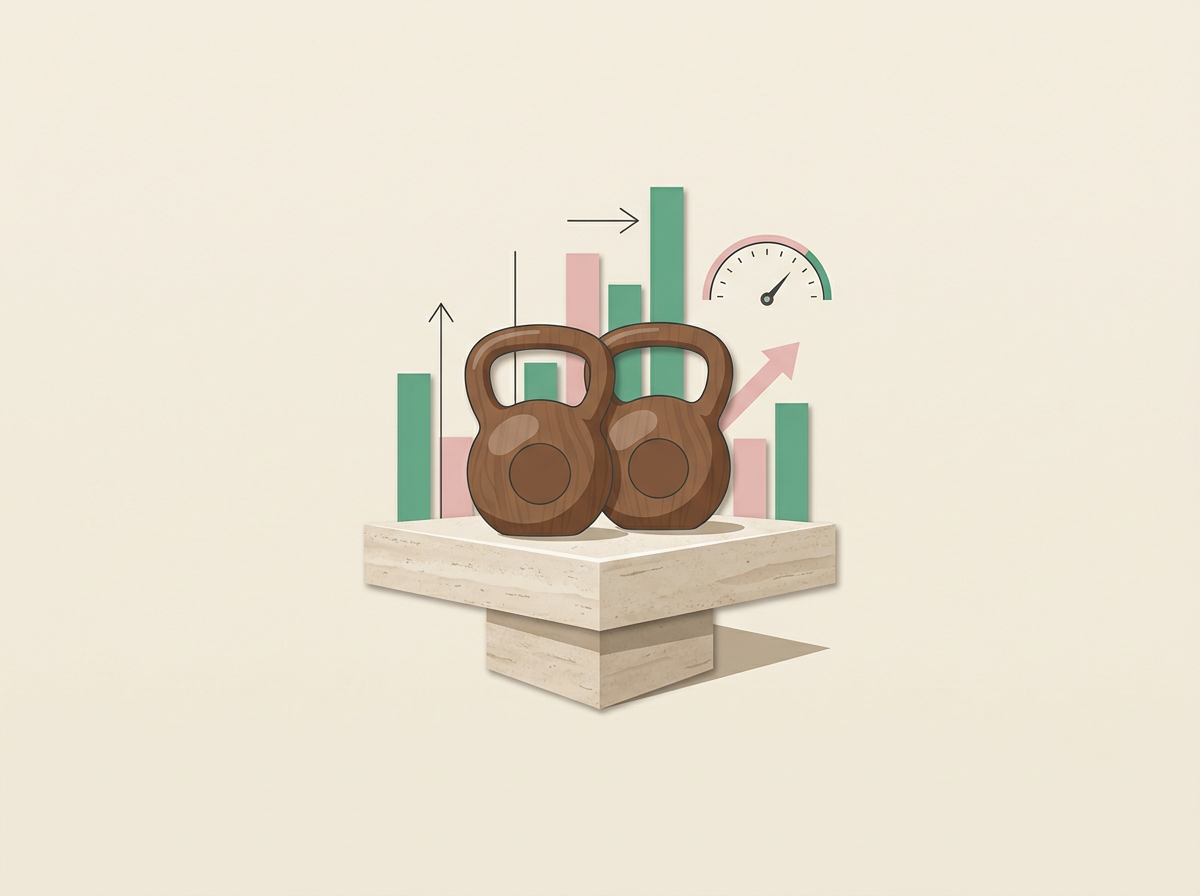
Oiled walnut kettlebells resting on a minimalist travertine living room plinth
The verdict: Unapologetically expensive, entirely immune to Wi-Fi outages, and built to outlive your grandchildren. These pieces are designed for the design-conscious lifter who wants thirty kilograms of iron in the living room without ruining the sightlines of their sofa. Price band: €280 to €650 per bell. For those curating a permanent home setup, our vetted /products directory has seen a 40 percent spike in searches for non-digital strength hardware over the last thirty days.
3. The acoustic pivot in boutique studios
If you walked into a newly opened strength or Pilates space this week, the first thing you likely noticed was the silence. Following new municipal noise ordinances in several European capitals and a broader cultural fatigue with sensory overload, the newest generation of /studios is investing heavily in architectural acoustics.
We are seeing sprayed cellulose ceilings, heavy linen drapery, and directional sound systems that keep music at a conversational 65 decibels. The programming has shifted to match the room. Without an eighty-decibel bass drop to mask poor form, instructors are returning to tactile cueing and slow eccentric loading. A four-second lower on a goblet squat requires focus, not a light show. Studios that treat their instructors as DJs are losing floor space to studios that treat their instructors as biomechanists.
4. Unflavored is the new superfood
The CPG aisles had a remarkably quiet week on the flavor front, and that is entirely by design. After years of magnesium powders that taste like synthetic blue raspberry and electrolyte sachets sweetened with enough stevia to numb the tongue, the most successful supplement drops of November 2026 are aggressively plain.
Three independent European nutrition brands launched clinical-grade, unflavored creatine monohydrate and trace mineral drops this week, packaged in refillable UV-glass apothecary jars. The marketing copy does not promise boundless spiritual energy; it lists particle mesh size and third-party heavy metal testing certificates. The consumer has finally realized that if a longevity powder requires three artificial masking agents to be palatable, it probably does not belong in a morning routine.
5. Hospitality trades pampering for physiotherapy
The autumn wellness retreat season kicked off in earnest this week in the Swiss and Austrian Alps, with a noticeable change in the staffing roster. Five-star properties that spent 2023 and 2024 hiring sound healers and breathwork shamans are now recruiting clinical sports physiotherapists and geriatricians specializing in sarcopenia prevention.
Instead of a seventy-minute aromatherapy massage and a glass of biodynamic prosecco, the benchmark €4,000 weekend package this November centres on VO2 max testing, gait analysis, and a personalized ninety-day progressive overload program you take home with you. Luxury travellers have decided that being rubbed with warm oils is pleasant, but being able to carry their own ski boots at age seventy-five is the ultimate flex.
Luxury hospitality has decided that warm oils are pleasant, but carrying your own ski boots at seventy-five is the ultimate flex.
What this means for you
If your current wellness routine feels like an unpaid part-time job managing charging cables, subscription renewals, and conflicting readiness scores, take this week's industry shift as permission to simplify. Start by auditing your recurring digital health expenses. If an app has not changed your actual behaviour in sixty days, cancel it and redirect that capital toward physical capability. A single session with a biomechanically literate trainer will correct the deadlift hinge that your smart ring has been misinterpreting as systemic stress for six months.
Finding that caliber of human guidance used to require weeks of trial-and-error across fragmented local directories. At Codex, we built our /intake engine specifically for this moment of consolidation: you spend three minutes detailing your training history, injuries, and aesthetic preferences, and our system returns one verified match across our network of /coaches and /studios. No endless scrolling, no unvetted influencers, and no monthly hardware tax required.
Verdict
The second week of November 2026 will be remembered as the moment the wellness industry finally turned down the volume. By stripping away the neon lighting, the artificial sweeteners, and the neurotic biometric dashboards, we are left with the elements that actually move the needle: heavy iron, quiet rooms, clean nutrition, and a human expert watching your form. It is less flashy on social media, which is precisely how you know it works.
FAQ
Why are athletes taking off their fitness trackers in late 2026?
A growing number of recreational and competitive athletes are experiencing orthosomnia and data fatigue, where negative morning readiness scores create a nocebo effect that hurts actual performance. Coaches are increasingly prescribing watch-free training days to rebuild intuitive pacing and breath awareness.
What is replacing high-intensity nightclub workouts in boutique studios?
Studios are pivoting toward acoustic-treated, naturally lit spaces focused on low-ratio tempo strength training and clinical Pilates. Without loud music to mask fatigue, the emphasis has returned to strict biomechanical form, slow eccentric loading, and hands-on coaching.
Are smart home gym machines still worth buying?
Market data shows a sharp decline in consumer appetite for screen-tethered, motorized home gym equipment that requires mandatory monthly software subscriptions. Buyers are redirecting their budgets toward architectural-grade analog equipment like cast-iron kettlebells and hardwood racks that hold their value indefinitely.
How do I transition from app-based workouts to a human coach?
Start by identifying the specific bottleneck an app cannot see, such as joint mobility restrictions or pacing plateaus. Using a curated matching service like the Codex intake allows you to bypass directory browsing and connect directly with a verified specialist who fits your exact physiology and schedule.