
The delivery bay at Codex headquarters is a peculiar ecosystem. On any given day, you might find a pallet of mushroom coffee next to a minimalist flywheel trainer, or a box of German-engineered compression boots leaning against a case of artisanal, non-alcoholic apéritifs. This controlled chaos is the physical manifestation of our curation process: a constant, rigorous effort to sort the genuinely useful from the merely well-marketed. Before any product, studio, or coach appears on the Codex platform, it passes through our hands and under our critical gaze.
This isn't just about unboxing shiny new objects. It's about a methodical process of evaluation that determines what’s worth your time, money, and trust. We live in an age of wellness maximalism, where every problem, real or imagined, has a dozen competing solutions vying for your subscription. Our job is to be the first line of defense, the patient filter that asks the hard questions so you don't have to.
What's happening
The wellness industry, valued by the Global Wellness Institute at over five trillion dollars, has a noise problem. It’s a cacophony of influencer endorsements, conflicting scientific claims, and aggressive search engine marketing. For the average person simply trying to sleep better or feel a bit more energetic, navigating this landscape is exhausting. This saturation has led to a crisis of trust. When everything is labeled 'revolutionary,' nothing is.
In response, we're observing a flight to quality and specificity. Consumers are becoming more discerning, looking for signals of authority, efficacy, and transparency. They want products certified by third parties like NSF for Sport. They want coaches who are not just charismatic but have been background-checked and had their credentials confirmed. They want to see the methodology, not just the marketing copy. This is the foundational logic behind the Codex verification system, which moves providers from being simply crawled by our AI to having their profile claimed and, ultimately, fully verified by our human team.
This shift also manifests in the types of products gaining traction. We’re moving past generic, one-size-fits-all solutions toward hyper-specific tools. Think less about a general multivitamin and more about a targeted supplement for cellular repair. Think less about a generic gym membership and more about a specialized studio that integrates with your work life. The market is maturing, and the focus is narrowing from broad promises to specific, measurable outcomes.
Why it matters now
This maturation is happening now because consumer fatigue has reached a tipping point. The endless scroll through targeted ads for miracle supplements and life-changing wearables has bred a healthy, and necessary, skepticism. People are tired of being beta testers for venture-backed wellness experiments that often over-promise and under-deliver. The financial stakes are also higher. As the cost of living rises, discretionary spending on wellness comes under greater scrutiny. A €150 per month gym membership or a €70 supplement needs to provide a clear return on investment.
Industry data supports this. While the wellness market continues to grow, consumer trust in brand marketing is declining. People are increasingly relying on curated platforms and trusted third-party reviews (you can see ours at /vs/reviews) to guide their decisions. The era of the beautifully packaged placebo is coming to a close, replaced by a demand for tangible results backed by data, whether from a clinical trial or a wearable on your own wrist. This is not just about avoiding scams; it's about optimizing investment in one’s own health. In a world of infinite choice, the ultimate luxury is confident decision-making.
The paradox of modern wellness isn't a lack of options, but a deafening surplus of mediocre ones.
The Picks
Here’s a snapshot of what’s currently on our testing bench, representing these broader shifts toward data, specificity, and integration.
The Hardware: Aura Strap 2 for Apple Watch
The quantified-self movement has long been dominated by two devices: the Oura Ring for sleep and recovery, and the Apple Watch for activity and connectivity. The Aura Strap 2 proposes a union of sorts. It replaces your standard Apple Watch band and adds bioelectrical impedance analysis (BIA) sensors, allowing you to track body composition and hydration levels directly from your wrist.
Historically, BIA has been the domain of smart scales or dedicated handheld devices. Integrating it into a watch strap is a clever move, reducing friction and device clutter. The companion app provides trends for muscle mass, fat percentage, and visceral fat. Our initial testing focuses on two things: consistency and actionability. Is the data reliable enough to track meaningful trends over time? And more importantly, does this information lead to better choices, or is it just another source of data-induced anxiety?
- Verdict: A potentially powerful tool for those serious about body composition, but its value hinges on the accuracy and consistency of its sensors.
- For: The data-obsessed athlete or biohacker who already lives in the Apple ecosystem.
- Price: ~€150
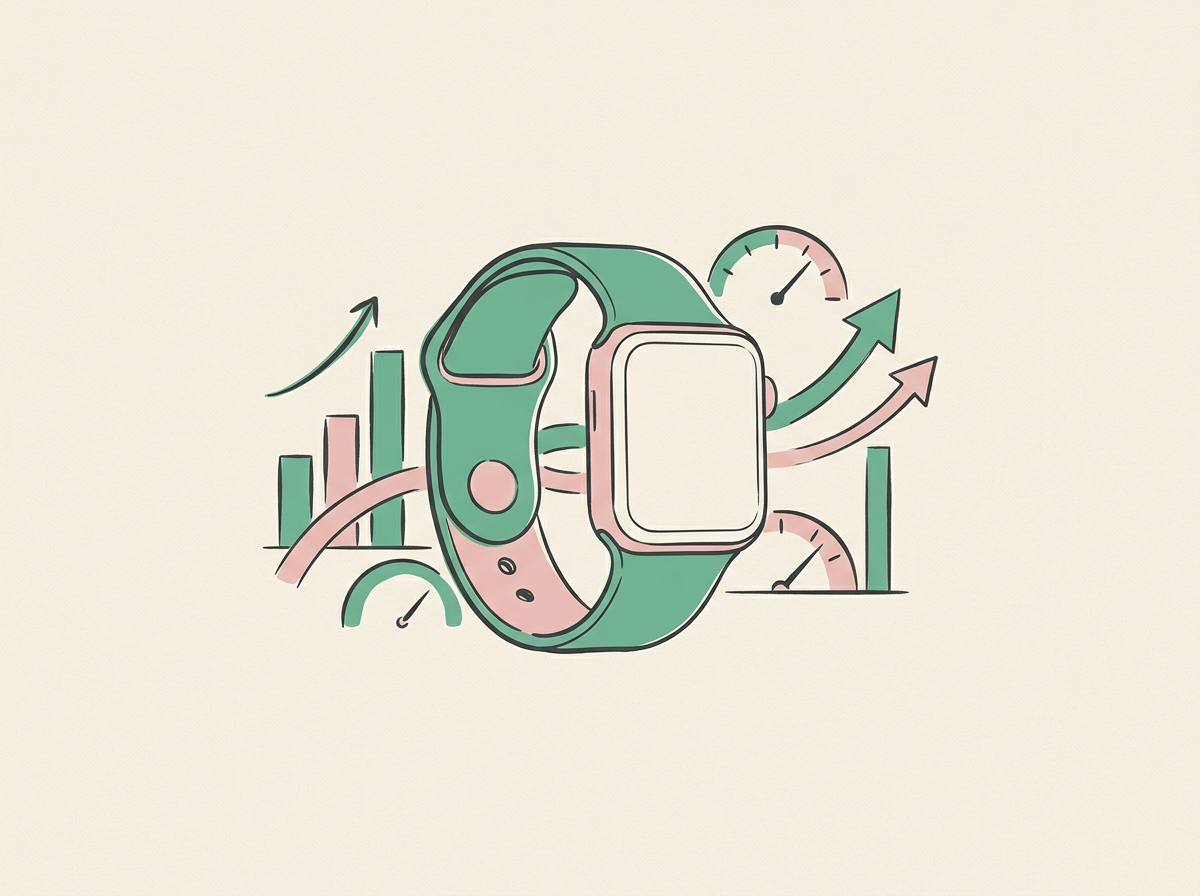
a minimalist shot of the Aura Strap 2 on an Apple Watch
The Consumable: Momentous NAD+ Regenerator
Longevity and “healthspan” are no longer niche concepts. This has fueled a surge in supplements targeting cellular aging, with NAD+ (Nicotinamide Adenine Dinucleotide) boosters at the forefront. NAD+ is a critical coenzyme for metabolism and energy production, and its levels naturally decline with age. Momentous, a brand that has built its reputation on rigorous third-party testing (NSF for Sport certified), is a player we watch closely. Their blend combines Nicotinamide Riboside (NR) with other ingredients designed to support the body's NAD+ recycling pathways.
What makes this product stand out for vetting is the brand's commitment to transparency and quality sourcing, a crucial differentiator in the notoriously opaque supplement market. We're less interested in subjective reports of 'feeling more energetic' and more in the science-backed mechanism and the brand's integrity. The high price point makes it a considered purchase, so the bar for efficacy is exceptionally high. Is this a cornerstone of a modern longevity protocol or an expensive biological experiment?
- Verdict: A premium, high-purity supplement for those serious about cellular health, backed by a trustworthy brand.
- For: Biohackers and individuals over 40 focused on long-term performance and vitality.
- Price: ~€65 for a 30-day supply
The Studio Trend: The 'Third Space' Gym
Perhaps the most interesting trend we're tracking is not a product, but a place. The line between work, life, and wellness has irrevocably blurred. In response, a new category of studio is emerging: the 'third space.' These are not just gyms. They are beautifully designed hybrids of a premium fitness club, a co-working space, a social club, and a recovery lounge. Think of brands like Heimat in Los Angeles or Remedy Place, which bills itself as a 'social wellness club.'
These spaces are a direct response to the isolation of remote work and the inefficiency of traveling between a gym, a coffee shop, and a WeWork. They offer a single destination for a morning workout, a focused work session fueled by healthy food, a lunchtime meditation pod, and an evening recovery session in an ice bath, perhaps followed by a networking event. They are selling an integrated lifestyle, a seamless blend of productivity and well-being. We are currently vetting several of these concepts to understand their programming, community, and value proposition for potential inclusion on the Codex platform, both for individual members and for corporate clients using /credits to provide premium wellness benefits to their teams.
- Verdict: A compelling evolution of the gym model for the work-from-anywhere era, but with a price tag to match.
- For: High-earning remote professionals, entrepreneurs, and anyone looking to streamline their wellness and work life into a single, high-end location.
- Price: Premium membership, often €300+ per month
Your gym is no longer just for training; it's competing with your office, your coffee shop, and your social club.
What this means for you
The stream of new products and trends is relentless. While the Aura Strap, NAD+ supplements, or a third-space gym might be compelling, they are not universal solutions. The right choice for you depends entirely on your specific goals, biology, budget, and lifestyle. A data-rich watch strap might be motivating for one person and overwhelming for another. A high-concept gym is only useful if it fits into your daily geography and social life.
This is why genuine curation is so essential. Instead of chasing the latest trend, the most effective approach is to start with yourself. Understanding your personal needs is the first step. The Codex AI intake is designed for exactly this purpose—to cut through the noise and provide a single, tailored recommendation based on your unique profile. From there, you can explore a verified selection of the best /coaches, /studios, and /products that are right for you, confident that the initial vetting has already been done.
Verdict
The current wellness landscape is defined by a shift toward high-signal, integrated, and verifiable solutions. The products and trends we're testing reflect this move toward actionable data, cellular-level science, and spaces that fit a blurred work-life world. As always, the best product is the one that's right for you, and our work is to make finding it simpler and safer.
FAQ
What is the Codex vetting process?
Codex uses a three-tier system. Our AI 'crawls' the web for coaches and studios. Providers can then 'claim' their profiles to add more detail. The highest tier, 'Verified,' involves a manual review by our team to confirm credentials, insurance, and quality, ensuring you're choosing from the best.
Is the Aura Strap 2 worth it?
It's a promising tool for those already in the Apple ecosystem who want to track body composition without buying another device. Its ultimate worth depends on the data's consistency and whether you can translate that data into actionable lifestyle changes.
What is a 'third space' gym?
A 'third space' gym is a hybrid facility that combines a premium fitness center with amenities typically found elsewhere, like co-working desks, cafes, recovery lounges (saunas, ice baths), and social areas. They cater to a modern, flexible lifestyle by merging work, wellness, and community in one place.
How do I know which of these products or trends is right for me?
The best way is to start with your personal needs, not with a product. Using a tool like the Codex AI intake can help you clarify your goals and get a single, tailored recommendation for a coach, studio, or product that best fits your unique profile and lifestyle.