The first chill of September always feels like a starting gun. The hazy, hedonistic days of summer recede, and a collective, quiet ambition settles in. It’s a season of renewal, a return to routine, a time when the wellness industry, never one to miss a cue, unleashes its most ambitious new ideas. The inbox fills with product drops, the feed surfaces new methodologies, and the air crackles with the promise of a better, more optimized you.
Navigating this deluge can feel like a full-time job. The signal-to-noise ratio in wellness is notoriously poor, a cacophony of breathless claims and venture-backed jargon. Our task, as ever, is to parse it for you. This week is a perfect microcosm of the industry's current state of schizophrenia: a push-pull between the hyper-quantified self and a quiet rebellion in favor of something more analogue, more intuitive. Let’s get into it.
What's happening
This week felt like a tale of two futures. In one corner, the march of technology continues its relentless integration into our bodies. A stealth-mode startup, Somatex, finally broke cover, revealing a line of 'haptic activewear'—yoga and Pilates apparel woven with microscopic sensors that provide physical feedback to correct your form in real time. Think of it as a sweater that can act as your spotter. In a similar vein, the functional beverage space saw another escalation with the launch of Cerebiome, a line of fermented drinks combining potent probiotic strains with specific nootropics designed to target the gut-brain axis for cognitive enhancement.
Simultaneously, a powerful counter-current is gaining momentum. We're observing the quiet consolidation of what might be called 'artisanal fitness'—a move away from the high-volume, metric-obsessed worlds of Hyrox and F45, and toward slower, more skill-based disciplines. This isn't just about recovery; it's about framing practices like Feldenkrais, advanced mobility, and modern dance as the primary workout, not the accessory. The goal isn't a faster time or a heavier lift, but a deeper connection to and control over one's own body.
Finally, from Cupertino, a market-shaking announcement. Apple confirmed its acquisition of MindSphere, a leading platform for tele-therapy and guided meditation, for a rumored $3 billion. The move signals a major deepening of Apple's commitment to mental wellness, aiming to integrate MindSphere's services directly into the Health ecosystem and, presumably, the Vision Pro. It’s a validation of the digital mental health space, but one that comes with significant questions about data, privacy, and market concentration.
Why it matters now
These seemingly disparate events are all threads of the same story: the battle for how we understand and interact with our own wellbeing. The Global Wellness Institute (GWI) noted in its 2025 report that the 'mental wellness' and 'mindful movement' sectors are the two fastest-growing segments, expanding at nearly twice the rate of the traditional fitness industry. This week's news is a direct reflection of that split. Somatex and Cerebiome represent the pinnacle of a data-driven approach, promising that with enough information, we can bio-hack our way to peak physical and cognitive states. It’s a compelling narrative: your body as a system to be optimized, with technology as the user manual.
The Apple acquisition pours fuel on this fire. By absorbing a massive mental health provider, Apple positions itself as the central repository for not just our physical data (steps, heart rate, sleep) but our psychological states as well. This creates the potential for unprecedentedly integrated care, but also an ecosystem that could be difficult to leave. On the other side of the schism, the rise of artisanal fitness is a direct, humanistic response. It argues that true mastery isn't found in a dashboard, but in proprioception, in the silent, internal feedback loop between mind and muscle. It’s a philosophy that champions presence over performance metrics.
The more our devices tell us how we feel, the harder we must work to remember how to feel for ourselves.
The Edit
The landscape is complex. Here’s our breakdown of the key players and movements from the week, and what they signify for the discerning consumer.
Somatex: The Sweater That Spots You
Somatex's debut collection, 'Form,' consists of leggings, tops, and a bodysuit. The fabric is embedded with a fine grid of proprietary 'myoelectric' sensors that read the subtle electrical activity of your muscles, alongside stretch and pressure sensors. This data is processed by a small, detachable 'puck' and sent to your phone. The app then provides real-time haptic feedback—a gentle buzz on your left hip to signal an imbalance in your Warrior II, a soft pulse along your spine to encourage length. It is, in essence, a private yoga lesson translated into vibration.
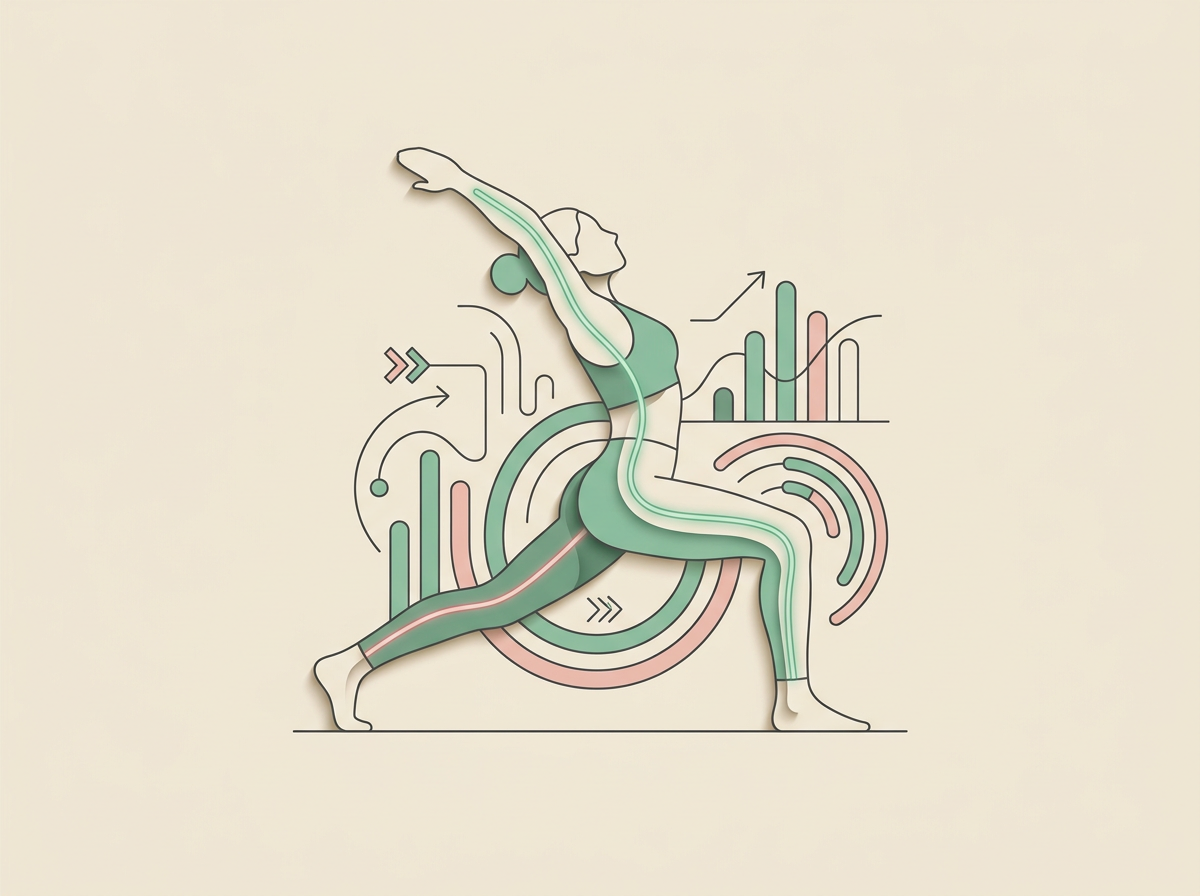
a minimalist illustration of yoga apparel with subtle glowing lines indicating sensors
Verdict: A fascinating and potentially revolutionary tool for solo practitioners and those in recovery, but it risks creating a dependence on external cues over internal body awareness. For: The dedicated yogi without regular access to a teacher, the physical therapy patient doing at-home exercises, the bio-hacker who wants to quantify their Vinyasa. Price: €250–€400
The Rise of Artisanal Fitness
This isn't a brand, but a movement. Where the last decade of functional fitness was about standardized, measurable, and competitive workouts (AMRAPs, EMOMs, race times), artisanal fitness is about pursuing movement for its own sake. It prioritizes complexity, grace, and control. Think less about how many burpees you can do in a minute, and more about whether you can transition seamlessly from a deep squat to a handstand. It draws from diverse fields: gymnastics, martial arts, dance, somatic therapies like the Feldenkrais Method, and the work of movement pioneers like Ido Portal.
The 'product' here is the practice itself, and the 'metric' is subjective mastery. This shift is reflected in changing consumer motivations, moving from purely aesthetic or performance goals toward a more integrated sense of mind-body connection.
Verdict: A welcome and mature evolution in the fitness space, though it can be less accessible and harder to 'gamify' than its mainstream counterparts. For: The ex-athlete looking for a sustainable practice, the yogi wanting more dynamic movement, anyone who finds the stopwatch more stressful than stimulating.
Cerebiome: Your Gut's New Guru
Joining the crowded functional beverage cooler is Cerebiome, a new line of milk kefirs and water kefirs. What sets it apart is its specificity. Each of its three initial products ('Focus,' 'Calm,' and 'Clarity') contains a distinct cocktail of well-researched nootropics and a specific, named blend of probiotic strains. 'Focus,' for instance, combines L-Theanine and Lion's Mane mushroom extract with the Lactobacillus plantarum PS128 strain, which has been studied for its effects on dopamine and serotonin pathways. The taste is remarkably clean, tart, and complex, a far cry from the sugary kombuchas that dominate the market.
Verdict: An intelligent, if pricey, evolution of the functional drink. It takes the gut-brain axis seriously and delivers a genuinely sophisticated product. For: The knowledge worker optimizing their afternoon slump, the bio-hacker looking to stack supplements in a more palatable format, anyone who has graduated from generic kombucha. Price: €8–€12
Apple's MindSphere Play
The acquisition of MindSphere is less about a single product and more about a fundamental market shift. By integrating a vast network of licensed therapists and mental health content into its ecosystem, Apple is poised to become the world's most influential mental wellness provider. For users, this could mean seamless integration: your Apple Watch detects a stress event, and your iPhone proactively suggests a breathing exercise or a session from a therapist you've connected with via the platform. The convenience is undeniable.
However, it concentrates an immense amount of sensitive health data within a single corporate entity. It also poses an existential threat to independent apps and platforms that can't compete with Apple's default-install advantage. For the thousands of independent wellness professionals, from therapists to meditation coaches, it raises the question of whether their future lies in joining Apple's platform or trying to survive outside its rapidly expanding walls.
When wellness becomes a walled garden, who holds the key to the gate?
What this means for you
The wellness world is bifurcating. One path leads to a future of seamless data integration, haptic feedback, and personalized nutritional inputs, largely mediated by a few dominant tech players. The other path leads back to the body, to intuition, and to the guidance of human experts who teach skills rather than analyze data. Neither path is inherently superior, but they serve different needs and philosophies. The critical task for you is to decide which you want to walk, and when.
You might use Somatex to refine your solo yoga practice but seek out a studio dedicated to artisanal movement to find community and expert guidance. You might be curious about the performance benefits of Cerebiome, but ultimately prefer the tailored advice from a verified human coach. The proliferation of choice doesn't have to be overwhelming. It simply raises the value of expert curation. Platforms like Codex, with our AI-powered intake, are designed for precisely this moment: to help you find the single right product, person, or place that aligns with your specific goals, values, and philosophy, cutting through the noise of an ever-more-complex market.
Verdict
This week's developments confirm that the future of wellness is not a monolith. It is a dynamic tension between the algorithm and the artisan, the quantified and the qualitative. The most valuable wellness tool in 2026 may not be a wearable or an app, but the clarity to choose which tools truly serve you, and which are simply elegant distractions.
FAQ
What is 'artisanal fitness'?
It's a term for a movement trend that prioritizes skill-based, mindful practices like advanced mobility, somatic therapies, and dance over metric-focused workouts like CrossFit or Hyrox. The goal is mastery and mind-body connection, not just performance data.
Is haptic clothing like Somatex effective?
While the technology is emerging, the concept is promising for providing real-time feedback, especially for solo practice or physical therapy. However, critics suggest it could hinder the development of one's own internal body awareness, or proprioception.
What are nootropics and probiotics in drinks like Cerebiome?
Nootropics are compounds that may improve cognitive function, like L-Theanine or Lion's Mane mushroom. Probiotics are live beneficial bacteria. Combining them in a fermented drink is based on research into the 'gut-brain axis,' the idea that gut health directly influences mental clarity and mood.
What does a major tech company buying a therapy app mean for me?
It could mean more convenient, integrated access to mental health tools through devices you already own. However, it also means your highly sensitive mental health data would be held by a large tech corporation, raising valid concerns about privacy, data usage, and a less competitive market for independent wellness providers.