The large oak table in our London office is less a collaborative workspace and more a high-stakes triage station. It’s currently home to three different non-alcoholic aperitifs, a prototype for a haptic meditation device that looks suspiciously like a smooth grey stone, a stack of pitch decks from aspiring coaches, and a single, slightly sad-looking protein bar that nobody has claimed. This is the physical manifestation of the Codex vetting process: a constant, occasionally messy, but always intentional search for signal in the noise.
Every product, coach, and studio that makes it onto the Codex platform has passed through this filter. We are not a directory; we are a curator. Our job is to test, to question, and to verify, so that when you use our AI-powered intake, the single match you receive is one we can stand behind. This quarterly dispatch is a look at what’s currently on that table, what’s on our class schedule, and what’s occupying the team’s collective mind-space.
What's happening
The wellness industry has long since moved past the era of simple solutions. The new frontier is a complex, hyper-personalized landscape where technology, biology, and human psychology intersect. Consumers are drowning in data from wearables, confused by conflicting nutritional advice, and paralyzed by the sheer number of boutique studios and online coaches vying for their attention. This paradox of choice is the central problem Codex was built to solve.
Our curation process is multi-layered. For coaches and studios, it begins with being crawled and listed. From there, they can claim their profile, which is the first step toward engagement. The final, most crucial step is verification—a rigorous process involving interviews, credential checks, and often, direct experience of their service. We try the class, we book the session, we use the product. This isn't just about quality control; it's about understanding the specific value proposition of each offering so our matching algorithm can work its magic. What is the coach's true specialty? Who is this studio really for?
This quarter, our focus has been on the emerging synthesis of high-tech and high-touch. We’re seeing more devices that aim to close the loop between tracking and action, more studios that reject the 'more-is-more' philosophy for a focused, minimalist approach, and a new breed of coach who leverages AI to enhance, not replace, their human intuition. It's a fascinating, and occasionally fraught, evolution of the space.
Why it matters now
Decision fatigue is no longer a niche psychological concept; it's the default state for the modern consumer. The Global Wellness Institute (GWI) noted in its 2025 report that while consumer spending on wellness continues to climb, satisfaction and reported outcomes have begun to plateau. The sheer volume of options, coupled with the often-exaggerated marketing claims, leads to a cycle of trial, error, and eventual burnout. People are spending more but not necessarily feeling better.
This is where a trusted third-party becomes essential. In a market projected to be saturated with AI-generated 'Top 10' lists and affiliate-driven reviews, our human-centric, evidence-based vetting provides a crucial counter-narrative. The value is not in presenting a thousand options, but in having the conviction and the research to present the single right one for a specific individual's context, goals, and disposition. That conviction can only be earned through the hands-on work of testing and analysis.
The search for wellness has become a new source of stress. Our first job is to edit the editors, and clear the noise.
The picks
Here's a snapshot of what’s passed the first-look test and is now in a deeper phase of evaluation at Codex.
The Device: A-Frame Aura Ring Gen 4
The wearable market has been stuck in a data-reporting rut for years. You get your sleep score, your HRV, your step count—a daily report card with little actionable advice. The rumored fourth-generation Aura Ring, which our contacts suggest is in late-stage field testing, aims to change that. The new 'A-Frame' architecture reportedly integrates a tiny electrodermal activity (EDA) sensor to not only detect rising stress levels in real-time but also to trigger a proactive intervention—a subtle haptic buzz sequence on the finger designed to cue a calming breathing pattern.
It’s a bold move from passive tracking to active intervention. We have a test unit in-house, and the experience is… interesting. The haptic alerts are subtle enough not to be distracting, but noticeable enough to act as a somatic mindfulness bell throughout the day. We're still evaluating the efficacy and the potential for it to become just another notification to ignore. But the concept is sound, and it represents a significant step forward in the 'so what?' of personal data.
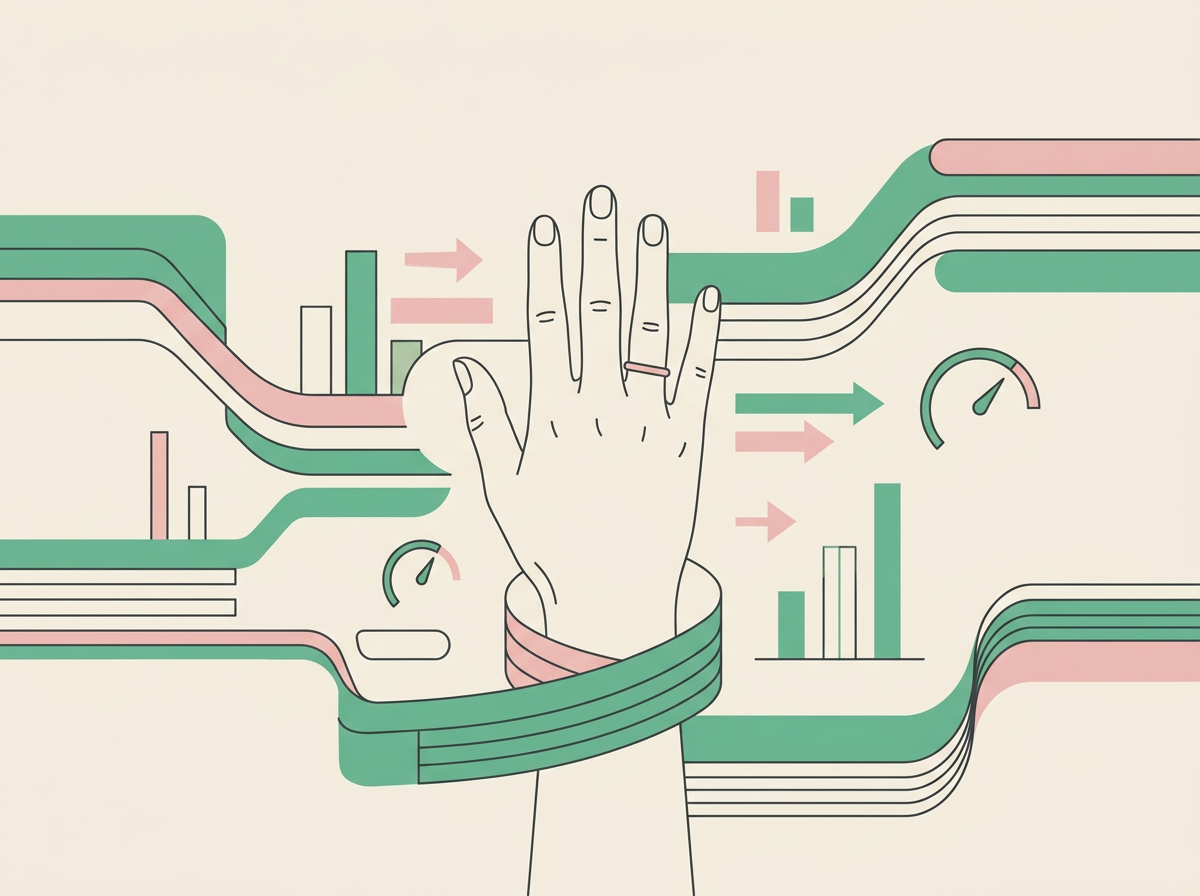
a minimalist line illustration of a hand wearing the ring
Verdict: A potentially game-changing shift from passive data collection to active, real-time nervous system support.
For: The data-driven individual who wants their tech to do more than just tell them they're stressed.
Price band: Expected €349–€399.
The Studio: Silo Strength, London
We’ve seen the pendulum swing from big-box gyms to hyper-specific boutiques (spin, boxing, rowing) and back again. Silo Strength, a new studio in a converted railway arch in Bermondsey, feels like a reaction to that churn. Their philosophy is one of 'functional minimalism'. The space is stark: rubber matting, exposed brick, and a deliberately limited arsenal of equipment—kettlebells, sandbags, pull-up bars, and sleds. There are no machines, no mirrors, and no screens.
Classes are capped at ten people and follow a simple weekly structure: two 'Grind' days (strength focus), two 'Gas' days (metabolic conditioning), and one 'Hybrid' day. The programming is intelligent, tough, and scalable. The vibe is less about hype and more about quiet competence. It's a place for people who are serious about getting stronger and fitter, and have zero interest in strobe lights or motivational platitudes shouted over a pop remix. We've been attending classes for a month, and while the absence of mirrors is initially disconcerting, it forces a focus on proprioception and how a movement feels rather than how it looks. It's a welcome change.
Verdict: A powerful antidote to the sensory overload of the modern boutique gym. Serious training in a refreshingly simple package.
For: People who want effective strength and conditioning without the frills. Former athletes, CrossFit curious, and anyone tired of the nightclub-as-a-gym trend.
How to book: Currently via their own app; we are in talks regarding integration and surfacing their availability via our studios portal.
The Methodology: Protocol-Led Coaching
One of the most interesting trends we’re tracking is the rise of 'protocol-led coaching'. This isn’t about replacing human coaches with AI, but about empowering them with better tools. A new wave of software platforms allows coaches to design, assign, and track client protocols—for everything from nutrition habits and sleep hygiene to specific workout progressions. The AI component helps by analyzing client data (from wearables, check-ins, etc.) to suggest when a protocol might need adjusting, flagging adherence issues, or highlighting positive trends.
This allows a single coach to provide a higher level of personalized, consistent support to more clients. It systematizes the 'what' (the evidence-based program) so the coach can focus on the 'why' and 'how'—the human elements of motivation, accountability, and emotional support. We are currently evaluating several of these platforms for our verified coaches to use, as it provides a scalable way to ensure a baseline of quality and evidence-based practice. It's the best of both worlds: data-driven precision guided by human empathy.
Technology can show you the data, but only a great coach can help you understand the story it's telling.
What this means for you
This peek behind the curtain is more than just an inventory of what's new; it's a reaffirmation of our core mission. In a world of endless choice, the most valuable service is a trustworthy filter. Whether it's a next-generation wearable that actually helps you manage stress, a studio that gets back to the fundamentals of effective training, or a coach empowered by better technology, our job is to find the things that genuinely work and connect them to the people they're right for.
The constant flow of products and pitches reinforces the need for a system like ours. If we, a team of dedicated industry experts, find the landscape complex to navigate, we know it's exponentially harder for a consumer. That's why we built the Codex intake, to cut through the complexity. And it’s why we created services like Codex Credits, allowing companies to give their teams the freedom to choose their own vetted wellness path, and a talent portal for studios to find the coaches we've already approved.
Verdict
The wellness landscape of late 2026 is defined by the integration of technology and the rediscovery of simplicity. The most promising innovations aren't about adding more features or noise, but about providing clearer signals and more effective, focused solutions. Our work continues, and you can be sure that only the best of what we test will ever receive a match on Codex.
FAQ
How does Codex actually verify a coach or studio?
Our verification is a multi-step process. After a coach or studio claims their profile, we conduct credential checks, interviews to assess their philosophy, and where possible, our team directly experiences their service—we take the class or book the session. Only those that meet our standards for quality, safety, and efficacy become 'verified'.
Is the Aura Ring Gen 4 a real product I can buy?
As of September 2026, the Aura Ring Gen 4 is not officially announced or for sale. Our review is based on a pre-release test unit and industry intelligence. We expect an official announcement from the company within the next few quarters.
What is 'functional minimalism' in a gym setting?
It's a training philosophy that prioritizes fundamental, compound movements and versatile equipment like kettlebells, sandbags, and bodyweight exercises. It strips away machines, mirrors, and other distractions to focus on building real-world strength, movement quality, and proprioception (your sense of your body in space).
I'm a coach. How can I learn more about protocol-led coaching?
We are currently evaluating platforms that facilitate this model. The best first step is to ensure your profile on Codex is claimed and up-to-date. As we roll out integrations with these tools, verified coaches in our network will be the first to get access and training. You can also explore our /talent portal for opportunities.